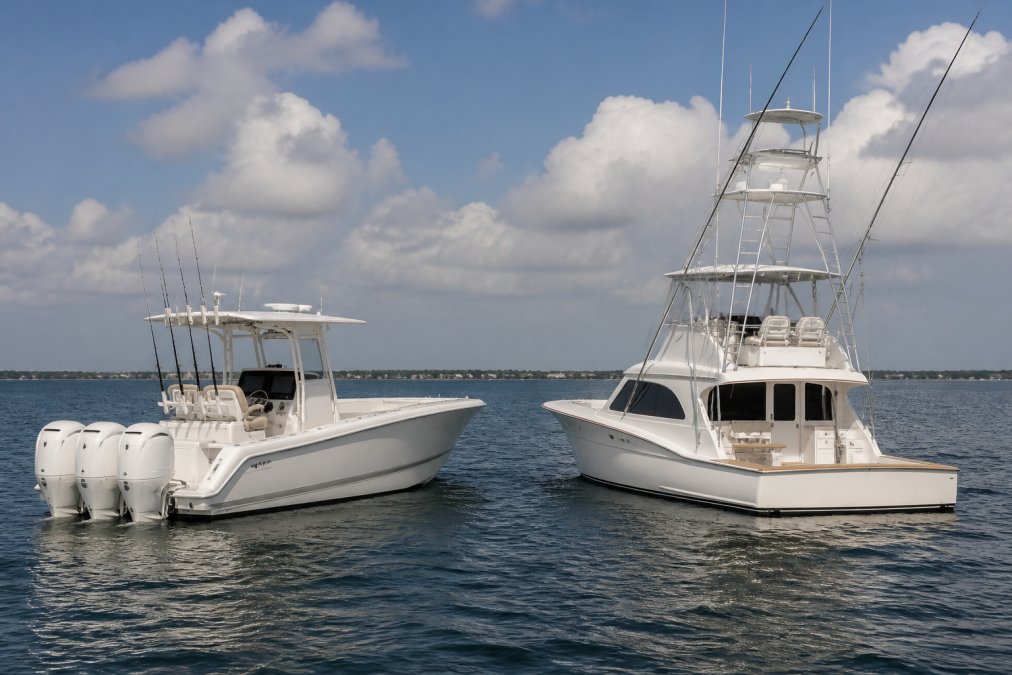
 comparison
Center Console vs Sportfish Yacht: 2026 Guide
Table of Contents
- Center Console vs Sportfish Yacht: What Each Vessel Actually Is
- Head-to-Head Comparison: Key Specs and Features
- Fishing Performance: 360-Degree Fishability, Cockpit Space, and Offshore Capability
- Best Center Console Boat for Bahamas Island Hopping
- Cost of Ownership for Sportfish Yachts vs Center Consoles
- Sportfish Yacht Maintenance Checklist: What Owners Must Budget For
- Which Vessel Fits Your Fishing Style: Family Cruiser or Hardcore Angler
- Center Console vs Sportfish Yacht: Making the Right Decision
- Frequently Asked Questions
Last Updated: September 2, 2026
Choosing between a center console vs sportfish yacht is one of the most consequential decisions a serious offshore angler can make. Both vessel types dominate the Eastern Seaboard and Bahamas fishing grounds, yet they serve fundamentally different purposes. Below, we break down everything from cockpit geometry and diesel burn to total cost of ownership and resale trajectories, so you can make this decision with real clarity.
Center Console vs Sportfish Yacht: What Each Vessel Actually Is
A sportfish convertible and a center console represent opposite ends of the offshore fishing spectrum.
Defining the Sportfish Convertible
A sportfish convertible is a full-displacement or semi-displacement inboard yacht, typically ranging from 45 to 80-plus feet, built around a large cockpit, a raised flybridge, and a fully enclosed interior. The Viking 54 Convertible exemplifies this category: twin MAN V12 1550CRM diesels, a 154-square-foot cockpit, a three-stateroom layout, and an optional Seakeeper 18 gyroscopic stabilizer for offshore comfort in rough conditions. The flybridge serves as a command center for spotting fish and coordinating the cockpit crew.
Understanding the Center Console Layout
A center console is defined by a single open deck with the helm console positioned at the midship centerline, creating 360-degree fishability. The Boston Whaler 420 Outrage demonstrates the format's evolution: up to 1,800 horsepower via triple Mercury Verado V12 outboards, integrated Simrad marine electronics, and joystick control for precise maneuvering.
Center consoles are outboard-powered, meaning lighter weight, shallower draft, and significantly lower maintenance costs than twin diesel inboards. The trade-off is interior volume: even the largest center consoles offer limited cabin amenities compared to a sportfish yacht.
Head-to-Head Comparison: Key Specs and Features
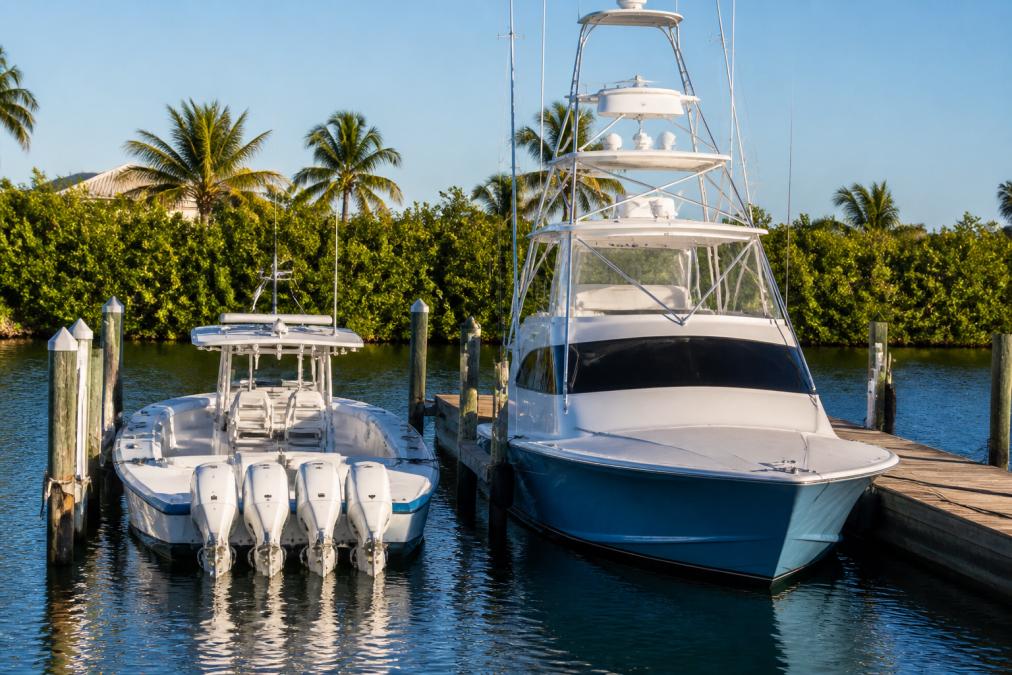
The center console vs sportfish yacht comparison comes into sharpest focus when you line up the key specifications side by side.
| Feature | Center Console | Sportfish Convertible |
|---|---|---|
| Typical Length Range | 25-45 ft | 45-80+ ft |
| Propulsion | Outboard (gasoline) | Inboard diesel |
| 360-Degree Fishability | Full | Limited (cockpit-focused) |
| Cabin Amenities | Minimal to moderate | Full staterooms, galley, heads |
| Flybridge / Tower | Rare | Standard |
| Livewell Capacity | Multiple, large | Typically 1-2 |
| Fuel Efficiency | Higher MPG | Lower MPG, higher capacity |
| Draft | Shallow | Deeper |
| Overnighting | Limited | Extended, comfortable |
| Outriggers | Add-on | Integrated |
| Gyroscopic Stabilizer | Rare | Available (e.g., Seakeeper) |
| Starting Price Range | Under $500K | Varies widely by size/age |
Fishing Performance: 360-Degree Fishability, Cockpit Space, and Offshore Capability
The center console's 360-degree fishability is its defining advantage. An angler can fight a fish from the bow, stern, or either beam without obstruction. The Grady-White Canyon 336's SeaV² hull provides a smooth, dry ride that keeps the deck fishable in challenging conditions.
Sportfish convertibles excel offshore. Their deep-V hull designs and greater beam provide superior seakeeping in true bluewater conditions. The Hatteras GT59 with twin Caterpillar C-32A 1600hp diesels can reach speeds over 40 knots, getting anglers to distant canyons faster than many center consoles. The large cockpit also provides a controlled fighting environment for blue marlin or large tuna.
Outrigger systems on a sportfish convertible are engineered into the vessel's structure. On a center console, they're an afterthought. According to NMMA's recreational boating industry data, offshore fishing vessels continue to represent one of the strongest segments of the marine market.
Best Center Console Boat for Bahamas Island Hopping
The best center console boat for Bahamas island hopping combines shallow draft, high-speed efficiency across open water, and enough fuel capacity to handle the crossing from South Florida comfortably.
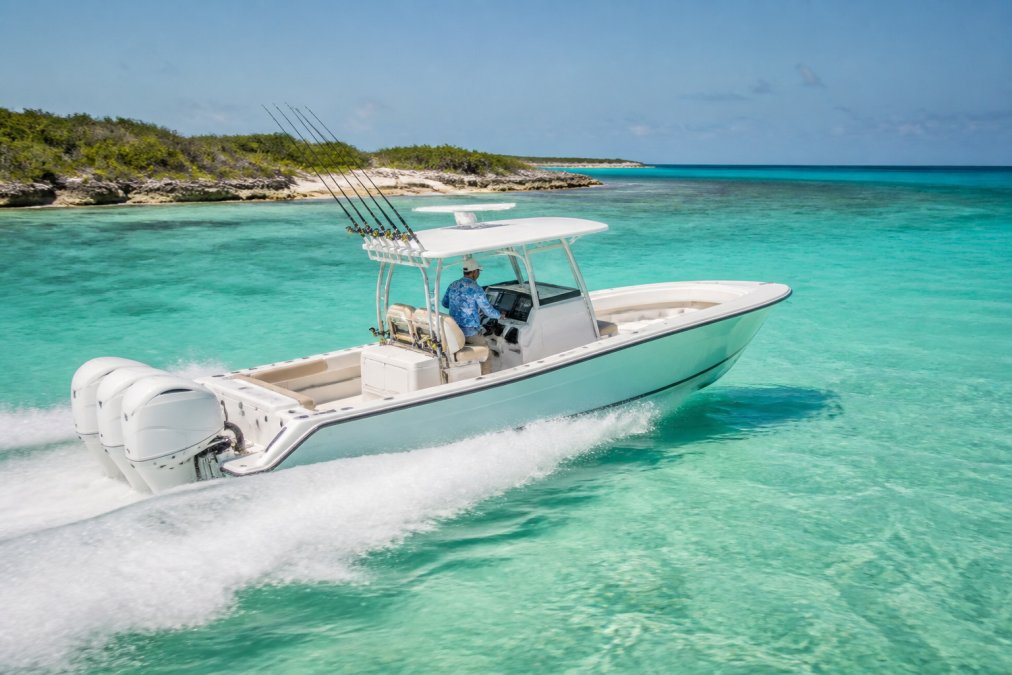
A center console in the 35-42 foot range with triple outboards hits the right balance. The Boston Whaler 420 Outrage is a serious contender: its foam-filled unsinkable hull construction, Simrad electronics package, and joystick piloting system make it a capable offshore crossing boat that can then transition to skinny-water flats fishing in the islands. The Grady-White Canyon 336 is a more accessible option with a capable hull design and optional bow thruster.
For island hopping, prioritize a center console with 300-350 gallon fuel capacity and efficient outboard motors. Fuel availability in the outer islands is inconsistent.
Cost of Ownership for Sportfish Yachts vs Center Consoles
Total cost of ownership is where many buyers get surprised. The purchase price is the smallest part of the equation over a five-year horizon.
Fuel Efficiency, Diesel Burn, and Nautical Range
Diesel inboard engines on a sportfish convertible burn significantly more fuel per hour than outboard gasoline engines on a comparable center console. A twin-diesel convertible running at cruising speed can consume 40-80 gallons per hour, while a triple-outboard center console typically burns 30-50 gallons per hour at comparable speeds. Over a full season of fishing, the diesel burn differential adds up to meaningful operating cost premium.
The sportfish convertible compensates with larger fuel capacity, often carrying 800-1,500 gallons, which extends nautical range for offshore passages. According to U.S. Energy Information Administration fuel pricing data, marine diesel and gasoline prices fluctuate seasonally, affecting the annual fuel cost comparison between these vessel types.
Resale Value and Depreciation Curves
Sportfish convertibles from premium builders like Viking and Hatteras hold their value better than most marine assets. A well-maintained Viking 54 Convertible depreciates more slowly because of the builder's reputation and the depth of the used market.
Center consoles depreciate faster in absolute dollar terms but represent a lower initial capital commitment. The Grady-White Canyon 336 is frequently cited by brokers for its strong resale value relative to its segment.
Sportfish Yacht Maintenance Checklist: What Owners Must Budget For
Sportfish yacht maintenance is a recurring, non-negotiable cost that scales with vessel size and engine complexity.
A practical sportfish yacht maintenance checklist for annual planning:
- Annual haul-out, bottom paint, and hull inspection
- Twin diesel engine service: oil, filters, impellers, zincs
- Transmission fluid and gear service
- Seacock inspection and greasing
- Outrigger hardware and rigging inspection
- Flybridge electronics calibration and software updates
- Joystick control system and bow thruster service (if equipped)
- Seakeeper gyroscopic stabilizer annual service (if equipped)
- Generator service and load testing
- AC system refrigerant check and condenser cleaning
- Windlass and anchor chain inspection
- Fire suppression system inspection (per USCG requirements)
- Life raft recertification
- EPIRB battery and registration check
- Fish box and livewell plumbing inspection
- Helm station electronics: chartplotter, radar, VHF radio testing
Center consoles have a shorter list, primarily because outboard engines are modular and easier to service. As documented in ABYC technical standards for recreational vessels, proper maintenance intervals for marine electrical systems, fuel systems, and propulsion components are critical for both safety compliance and insurance validity.
Which Vessel Fits Your Fishing Style: Family Cruiser or Hardcore Angler
The center console vs sportfish yacht decision ultimately comes down to how you fish, who you fish with, and how far you go.
Cabin Amenities, Overnighting, and Flybridge Comfort
Sportfish convertibles are the clear winner for extended offshore trips and family use. The Viking 54 Convertible's three-stateroom, two-head layout with a fully equipped galley means a family of four or five can spend a week aboard in genuine comfort. The flybridge provides a social space that center consoles cannot replicate.
Center consoles offer limited cabin amenities. The Boston Whaler 420 Outrage's cabin includes a V-berth, a head, and seven feet of headroom. It's a day boat with overnight capability, not a vessel designed for multi-day passages with family comfort as a priority.
If your fishing trips are day runs with serious anglers who want maximum deck space, the center console wins. If your trips involve family members, overnight passages, or tournament circuits that require arriving rested, the sportfish convertible is the right vessel.
Technological Integration: Joystick Control, Marine Electronics, and Gyroscopic Stabilizers
Modern center consoles now offer joystick control systems, integrated Simrad or Garmin chartplotter suites, and autopilot packages. The Boston Whaler 420 Outrage ships with a full Simrad electronics package as standard.
Sportfish convertibles offer deeper technology integration: Seakeeper gyroscopic stabilizers eliminate roll at rest and at trolling speeds, which matters enormously for crew comfort on overnight passages. Flybridge helm stations integrate radar, thermal cameras, and network-connected chartplotters that give captains situational awareness advantages.
Match the technology to your actual use pattern. A gyroscopic stabilizer on a day-trip vessel is an expensive feature with limited return. Joystick control on a center console used primarily at familiar home ports adds cost with minimal practical benefit.
Center Console vs Sportfish Yacht: Making the Right Decision
The center console vs sportfish yacht decision has a clear framework once you're honest about three variables: how far offshore you fish, how long you stay out, and who comes with you.
Choose a center console if your fishing is primarily day trips, coastal and inshore work, or island hopping in shallow-draft environments. The 360-degree fishability, lower maintenance costs, and versatility make it the superior tool for anglers who fish hard and fish often. The best center console boat for Bahamas island hopping sits in the 35-42 foot range with triple outboards, a capable hull design, and a joystick control system.
Choose a sportfish convertible if you're running to the canyons, fishing tournaments, or bringing family aboard for extended trips. The cabin amenities, flybridge comfort, integrated outrigger systems, and offshore seakeeping of a vessel like the Viking 54 or Hatteras GT59 justify the higher cost of ownership for buyers who will genuinely use those capabilities.
| Decision Factor | Choose Center Console | Choose Sportfish Convertible |
|---|---|---|
| Primary Use | Day trips, coastal, island hopping | Offshore passages, tournaments |
| Crew | Solo or 2-4 hardcore anglers | Family, mixed guests, tournament crew |
| Overnighting | Occasional, minimal comfort needed | Regular, comfort is a priority |
| Draft Requirements | Shallow water access needed | Deep-water marina access available |
| Budget (operating) | Lower annual costs preferred | Higher TCO acceptable |
| Fishing Style | 360-degree, multi-species | Cockpit-focused, bluewater pelagics |
For buyers navigating this decision with real capital on the line, working with brokers who have actually run both vessel types in offshore conditions makes a material difference. The spec sheets tell you what a boat can do. Experience tells you what it's like to do it at midnight in 8-foot seas 60 miles offshore.
Deciding between a center console and a sportfish convertible deserves more than a forum thread. Spencer Christopher Yacht and Ship's team of USCG captains, former crew, and marine engineers has the hands-on experience to walk you through both vessel types with complete fiduciary care, from the first showing to final delivery. Our in-house closing department handles the transaction from both sides, so nothing falls through the cracks. Sell your yacht or start your search with Spencer Christopher Yacht and Ship and get representation that puts your interests first.
Frequently Asked Questions
What are the primary performance differences between a center console and a sportfish yacht?
Center consoles run on outboard engines, offer shallower draft, and deliver 360-degree fishability with an open deck. Sportfish convertibles use diesel inboard engines, carry significantly more fuel capacity, and reach distant offshore grounds faster at cruising speeds. The hull design and deadrise on a convertible also handle rough offshore conditions better than most center consoles, though large flagship center consoles like the Boston Whaler 420 Outrage have closed that gap considerably.
How does maintenance differ between a center console and a sportfish yacht?
Center consoles generally cost less to maintain because outboard engines are more accessible, easier to replace, and require fewer specialized technicians. Sportfish yachts with twin diesel inboards, a flybridge, full cabin systems, and optional Seakeeper gyroscopic stabilizers carry far higher annual maintenance costs. Owners should budget for regular diesel service, hull hauls, generator maintenance, and system checks on electronics and stabilizers, all of which add up quickly on a vessel like the Viking 54 Convertible or Hatteras GT59.
Is a center console or a sportfish yacht better for family-oriented offshore trips?
For day trips and shallow coastal runs, a center console offers versatility, easy boarding, and an open layout families enjoy. For multi-day offshore trips, a sportfish convertible wins: three-stateroom layouts, a full galley, two heads, and salon space make overnighting comfortable. Vessels like the Viking 54 Convertible provide cabin amenities that rival a small apartment. Families planning extended Bahamas runs or offshore tournament trips will find the convertible's accommodations far more practical than a center console's compact cabin.
What are the resale value trends for sportfish yachts versus large center consoles?
Well-maintained sportfish convertibles from builders like Viking and Hatteras hold value strongly, particularly tournament-rigged models with documented service records. Large center consoles from premium builders also retain value well, especially flagship models with low hours. Both vessel types depreciate most sharply in the first three to five years. After that, depreciation flattens on quality builds. Buyers working with an experienced broker can identify vessels where the depreciation curve has already absorbed the steepest losses, representing better value at acquisition.
Which boat type is better for Bahamas island hopping?
For Bahamas island hopping, a center console with shallow draft is often the better choice. Many Bahamian cuts and anchorages have depths that make a deep-draft convertible impractical. A 33- to 42-foot center console with sufficient fuel capacity, a livewell, fish boxes, and a cabin with a head covers most scenarios. Models like the Grady-White Canyon 336 and Boston Whaler 420 Outrage are purpose-built for this kind of mixed-use coastal and offshore fishing across shallow-water environments.