 ultimate-guide
First Time Yacht Buyer Checklist: 2026 Guide
Table of Contents
- How to Use This First Time Yacht Buyer Checklist
- Define Your Boating Needs and Set a Realistic Budget
- The Marine Survey Checklist for Buyers
- Yacht Purchase Agreement Legal Tips for First-Time Buyers
- Yacht Ownership Costs Breakdown: What to Expect
- Build Your Post-Purchase Onboarding Plan
- Conclusion: Your First Yacht Purchase Starts Here
- Frequently Asked Questions
Last Updated: September 4, 2026
How to Use This First Time Yacht Buyer Checklist
Buying a yacht is a significant financial commitment involving far more than picking a vessel you like. This checklist from Spencer Christopher Yacht and Ship walks you through the essential stages of acquisition.
Most first-time buyers focus on the vessel and overlook the legal and financial layers that determine whether a deal is sound.
Define Your Boating Needs and Set a Realistic Budget
Before looking at listings, define how you will use the yacht. Fishing the Bahamas requires different hull design, draft, and range than coastal family cruises.
Establish a realistic budget that includes the purchase price plus financing, insurance, dockage, and maintenance.
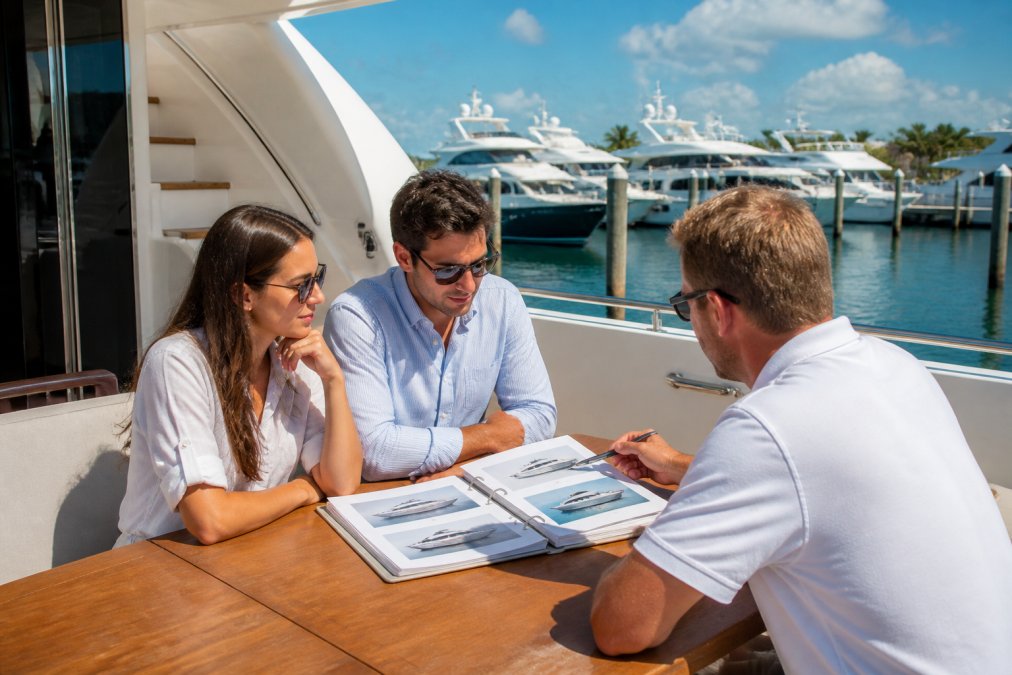
Choosing the Right Yacht Type for Your Lifestyle
The main categories to consider are express cruisers, sportfish yachts, and motor yachts. Sportfish yachts prioritize performance and fishing capability, while motor yachts emphasize interior volume and cruising comfort. Center consoles offer versatility for day trips and fishing but provide limited accommodation.
Ask yourself these questions:
- How many people will regularly be onboard?
- What is the primary activity: fishing, cruising, or entertaining?
- How far do you plan to travel between ports?
- Do you need overnight accommodations?
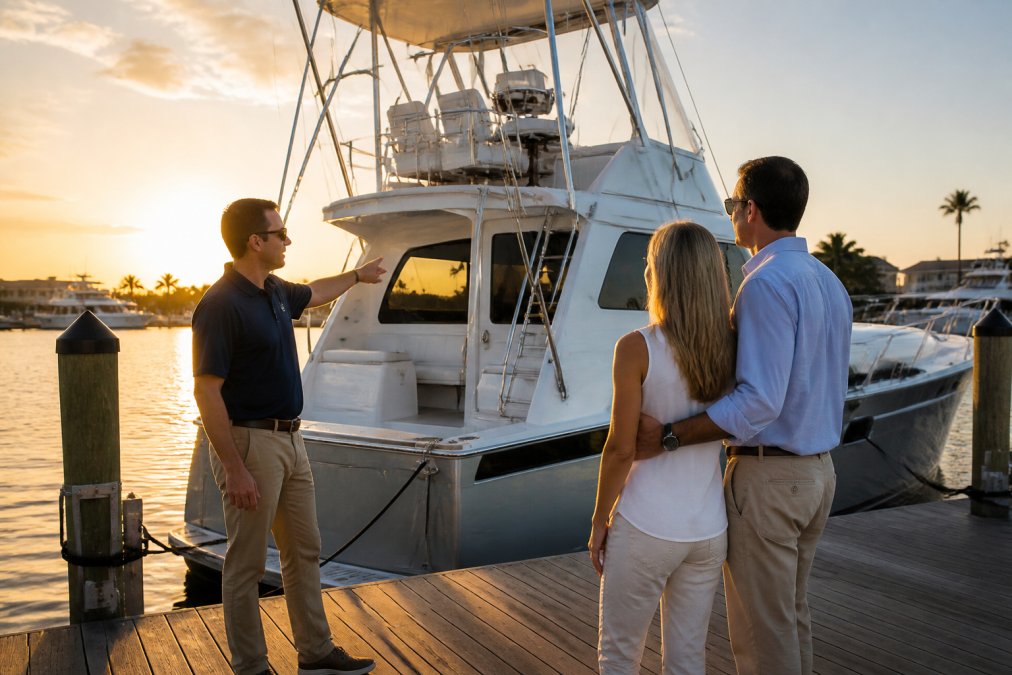
Your answers will narrow the field considerably. A broker can explain trade-offs before you develop an attachment to a specific model.
Financing, Insurance, and Slip Fees
Yacht financing typically requires a down payment, and the terms depend on the vessel's age, condition, and your credit profile (federalreserve.gov). Boat insurance is not optional; most marinas require proof of coverage before they will assign a slip. The U.S. Coast Guard documentation requirements determine whether your vessel needs federal documentation, which affects financing and title transfer.
Slip fees vary widely based on location and vessel length. Contact marinas in the intended home port before committing to a purchase to confirm availability and pricing.
The Marine Survey Checklist for Buyers
A marine survey is the single most important protective step in the purchase process. It is a comprehensive pre-purchase inspection by a qualified, independent professional who works for you, not the seller or broker.
Selecting a Qualified Surveyor
Your surveyor should be accredited by SAMS or NAMS, which require experience, peer review, and continuing education. Ask for credentials, errors and omissions insurance, and a sample report.
Hull and Structural Integrity Inspection
The surveyor will begin with a thorough examination of the hull, both above and below the waterline, checking for:
- Impact damage and structural repairs: Look for signs of previous collisions or groundings, such as uneven gelcoat, filler patches, or distorted hull panels. The surveyor will use a moisture meter to detect water intrusion in the fiberglass laminate or core material.
- Osmotic blistering: Small blisters on the bottom paint are common, but extensive blistering can indicate a more serious condition called osmosis, which compromises the hull's structural integrity.
- Transom and stringer integrity: These are the primary structural members of the hull. The surveyor will tap the transom and stringers with a mallet, listening for a dull or hollow sound that indicates delamination or rot. They will also check for flexing or movement under pressure.
- Deck and hardware attachments: The surveyor will inspect the deck for soft spots, which indicate core saturation, and check that all through-deck fittings, cleats, and stanchions are properly bedded and backed to prevent water intrusion.
Engine and Mechanical Systems Assessment
Many buyers opt for a dedicated engine survey by a mechanic specializing in the specific make and model. The assessment includes:
- Maintenance history review: The surveyor will review the engine service logs, looking for regular oil changes, impeller replacements, and other scheduled maintenance. A well-documented history is a strong indicator of proper care.
- Visual inspection for leaks and corrosion: The surveyor will look for signs of oil, coolant, or fuel leaks in the bilge and around the engine. Corrosion on the engine block, heat exchangers, or exhaust risers can be a sign of neglect or a saltwater cooling system that wasn't properly flushed.
- Operational testing: The engine should be started cold and run through its full RPM range. The surveyor will check for excessive smoke, unusual noises, and proper oil pressure and temperature readings.
- Through-hull fittings and seacocks: All through-hull fittings must be in good condition, with properly operating seacocks (valves). A seized or corroded seacock is a safety hazard and a common finding on older vessels.
Rigging, Sails, and Deck Hardware (for Sailboats)
If you are purchasing a sailboat, the survey will include a detailed inspection of the rig, including:
- Standing rigging: The surveyor will inspect the wire or rod rigging for corrosion, broken strands, and worn swage fittings. They will also check the chainplates where the rigging attaches to the hull, looking for signs of corrosion or movement.
- Running rigging: The surveyor will check the condition of the halyards, sheets, and control lines for chafe and wear.
- Sails: The surveyor will assess the condition of the sails, looking for tears, worn stitching, and UV damage. They will also check the sail's shape and whether it is original or a replacement.
- Deck hardware: Winches, blocks, and other deck hardware will be checked for smooth operation and secure mounting.
Electronics and Navigation Equipment
The surveyor will verify that all installed electronics, chartplotter, radar, VHF radio, autopilot, and other navigation systems, power on, display properly, and receive signals, and will inspect wiring.
The Sea Trial: A Critical Component
The sea trial is a controlled test of the vessel's systems under real-world conditions, including:
- Engine performance: The vessel should be brought up to its rated cruising RPM and held there for a period to check for overheating, loss of power, or excessive vibration.
- Steering and handling: The surveyor will perform turning maneuvers at various speeds to check the steering system and the vessel's responsiveness.
- Systems check: All onboard systems should be tested during the sea trial, including the generator, air conditioning, refrigeration, water maker, and navigation electronics.
- Docking and maneuvering: The sea trial should include a return to the dock to assess low-speed maneuvering and the operation of the bow thruster, if equipped.
Use the sea trial to ask questions, get a feel for the vessel, and verify it performs as described.
Yacht Purchase Agreement Legal Tips for First-Time Buyers
The purchase agreement is a binding contract whose terms determine your legal protections.
The agreement should be contingent on a satisfactory survey and sea trial, with specific language about what constitutes acceptable findings.
Title, Liens, and Escrow
Before transferring funds, verify the seller has clear title. Request a title search to confirm there are no outstanding mortgages or maritime liens.
Maritime liens can attach to a vessel for unpaid work, supplies, or even crew wages, and they travel with the yacht regardless of ownership changes. An escrow service protects both parties by holding funds until all conditions of the sale are met. The U.S. Coast Guard vessel documentation search allows you to verify the vessel's current documentation status.
A bill of sale is required to transfer ownership, and the document must be notarized and recorded with the appropriate authorities. Working with a brokerage that has an in-house closing department, such as Spencer Christopher Yacht and Ship, simplifies this process because the transaction team handles the documentation and coordinates with your attorney if you have one.
Yacht Ownership Costs Breakdown: What to Expect
The purchase price accounts for only a fraction of the total financial picture. First-time buyers are often surprised by recurring expenses that begin at delivery.
The 10% Rule and Its Limitations
A common rule of thumb is to budget 10% of the purchase price annually for maintenance, but it is a blunt instrument. The actual figure depends on the vessel's age, condition, complexity, and use.
Building Your Total Cost of Ownership (TCO) Calculator
To estimate your annual costs, create a spreadsheet with the following line items. Use the seller's maintenance logs and dockage invoices, and get quotes from local marinas and insurance brokers.
| Cost Category | Typical Annual Range | Key Factors | How to Estimate |
|---|---|---|---|
| Slip Fees | $3,000 - $20,000+ | Location, vessel length, amenities (power, water, Wi-Fi), seasonal vs. annual contract | Contact marinas in your intended home port. Rates are typically quoted per foot per month. A 40-foot vessel at $15/foot/month costs $7,200/year. |
| Insurance | $1,500 - $10,000+ | Vessel value, age, your boating experience, navigation area, liability limits | Get quotes from a marine insurance broker. Premiums are typically 1-1.5% of the insured value for a new buyer. |
| Maintenance & Repairs | 5% - 15% of purchase price | Vessel age, condition, engine hours, saltwater vs. freshwater use | Review the seller's maintenance logs for the past 3 years. Budget for routine items (oil changes, bottom cleaning, zincs) and a reserve for unexpected repairs. |
| Winterization & Storage | $1,000 - $5,000+ | Climate, storage method (wet slip vs. dry rack vs. shrink wrap), vessel size | Get quotes from local storage yards. Winterization includes antifreeze, engine fogging, and system checks. |
| Electronics Upgrades | $0 - $5,000+ per year | Age of current electronics, your needs | Plan for a major electronics refresh every 5-7 years. Set aside a small annual reserve. |
| Bottom Paint & Hull Cleaning | $1,000 - $3,000+ | Water temperature, fouling rate, haul-out frequency | Get quotes from a local boatyard. Bottom paint typically lasts 1-2 years. |
| Registration & Documentation | $50 - $500 | State registration fees, U.S. Coast Guard documentation fees | Check your state's fee schedule and the USCG documentation fee schedule. |
| Crew (if applicable) | $50,000 - $200,000+ | Vessel size, captain and crew requirements, cruising schedule | This is a significant cost for vessels over 50 feet. Factor in salary, benefits, and food. |
The Hidden Costs of Depreciation and Opportunity Cost
Most production yachts depreciate 10-15% in the first five years, with the steepest drop in the first two. Custom or classic vessels may hold value better but cost more to maintain. The opportunity cost of capital tied up in a yacht is a conservative 5-7% annually.
How to Get Real Numbers Before You Buy
- Ask the seller for the past three years of maintenance records and dockage invoices. These documents reveal the real cost of ownership more accurately than any estimate. A seller who is unwilling to share this information should raise a red flag.
- Talk to the marina where the vessel is currently docked. They can provide a history of the slip fees and any work they have performed on the vessel.
- Get a pre-purchase insurance quote. This will give you a firm number for your insurance line item.
- Consult with a marine mechanic. Ask them to estimate the annual maintenance cost for the specific engine model and hours.
The Five-Year Horizon
Evaluate total cost of ownership over a five-year horizon, including purchase price, annual operating costs, and major anticipated expenses.
Build Your Post-Purchase Onboarding Plan
A post-purchase onboarding plan covers the first 90 days of ownership, including sea trials, systems familiarization, and a maintenance schedule.
Schedule a shakedown cruise in the first month to test all systems while the vessel is still under warranty or survey protections.
Create a maintenance log from day one, documenting every service, repair, and upgrade. Establish relationships with local mechanics, riggers, and electronics technicians before problems arise.
Conclusion: Your First Yacht Purchase Starts Here
The first-time yacht buyer journey involves many moving parts, from sea trial to closing. Working with a team that understands both technical and legal sides makes the difference between a smooth acquisition and a costly learning experience.
Spencer Christopher Yacht and Ship provides complete fiduciary care from the first showing to final delivery, with brokers who are USCG captains, former crew, and engineers. Our in-house closing department ensures transparent transaction management.
Get started with Spencer Christopher Yacht and Ship and approach your first yacht purchase with confidence.
Frequently Asked Questions
What is the best yacht for a first-time buyer?
The best yacht for a first-time buyer is typically a late-model center console or a smaller sportfish yacht between 30 and 45 feet. These vessels offer manageable engine hours, simpler systems, and easier docking than larger superyachts. Focus on a boat with low hours, a clean maintenance log, and a recent survey. A yacht broker with captain experience can help match a specific hull to your boating style, whether that's fishing the Bahamas or coastal cruising.
What are the hidden costs of yacht ownership beyond the purchase price?
Beyond the purchase price, your yacht ownership costs breakdown includes slip fees, insurance, routine maintenance, winterization, electronics upgrades, and crew if you buy a vessel over 50 feet. Many first-time buyers underestimate annual upkeep. Fuel, docking, and haul-out fees for bottom painting add up quickly. A detailed budget should include a reserve fund for unexpected mechanical repairs and a depreciation estimate.
How does the yacht survey process protect a first-time buyer?
A marine survey protects you by identifying hull integrity issues, engine problems, and safety equipment deficiencies before you commit. The surveyor inspects the transom, bilge, gelcoat, rigging, and propulsion system, then provides a report you can use to negotiate repairs or a lower price. Always hire a surveyor who follows current standards and attend the survey in person. This is your chance to ask questions about the vessel's condition from an independent expert.
What should be included in a yacht purchase agreement?
A yacht purchase agreement should include the vessel's hull identification number, the agreed price, deposit terms held in escrow, and contingencies for the marine survey and sea trial. It must specify what repairs the seller will complete and the delivery date. Your yacht purchase agreement legal tips include confirming the vessel is free of maritime liens and that the seller provides a clear bill of sale. Have a maritime attorney review it before you sign.
Do I need a yacht broker for my first purchase?
For a first-time buyer, a yacht broker provides critical guidance through the survey, sea trial, and closing process. An experienced broker who is also a USCG captain can spot problems that a checklist might miss, and they help negotiate price and repairs. They also coordinate with maritime attorneys and the closing department. While you can buy directly, a broker's fiduciary duty ensures your interests are protected, which is valuable when you are unfamiliar with the process.
What is the 12 person rule on a yacht?
The 12 person rule refers to Coast Guard regulations that classify a vessel as a small passenger vessel if it carries more than 12 passengers for hire. This rule affects commercial charters, not private recreational use. For a first-time buyer, the rule matters only if you plan to charter your yacht. Private vessels have different safety equipment requirements based on length. Check current Coast Guard requirements for your specific yacht size and intended use.
Is buying a yacht a tax write-off?
A yacht can be a tax write-off only if you use it for business purposes, such as chartering or entertaining clients. The deduction depends on the percentage of business use versus personal use, and you must document hours carefully. Consult a maritime tax specialist to understand vessel registration and depreciation rules. For a purely recreational first-time buyer, the purchase price is not tax-deductible, though some states offer sales tax exemptions under specific size or usage conditions.