 how-to
Hiring a Yacht Broker in Bahamas: 2026 Guide
Table of Contents
- What a Yacht Broker Actually Does for You
- How to Vet a Yacht Broker's Credentials
- Yacht Broker Commission Rates and Fee Structures
- The Yacht Survey and Sea Trial Process Explained
- Yacht Purchase Agreement Legal Tips for Bahamas Transactions
- Broker vs. Direct Booking: Which Saves You More?
- Frequently Asked Questions
Last Updated: September 12, 2026
What a Yacht Broker Actually Does for You
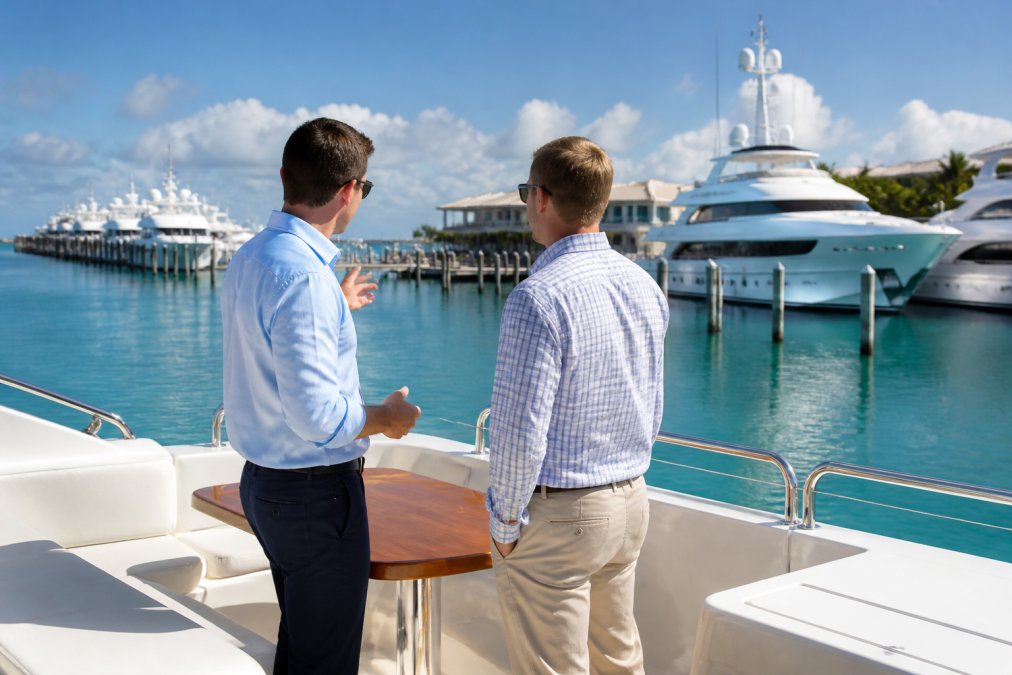
Hiring a yacht broker in the Bahamas means engaging a licensed, bonded professional to represent your interests from first showing through survey, sea trial, closing, and delivery. A broker handles vessel sourcing, negotiation, documentation, and settlement logistics so you are not navigating a six-figure purchase alone. At Spencer Christopher Yacht and Ship, our brokers are U.S. Coast Guard captains, former crew, and engineers, so the person walking the deck with you can read a hull, an engine room, and a rigging report the same way you read a listing sheet.
A broker's real value shows up in what they talk you out of, not just what they sell you.
Buyer Representation vs. Seller Representation
Buyer representation means the broker owes duties to you: disclosure of known defects, honest valuation guidance, and negotiation aimed at your interests. Seller representation means the broker works for the owner and negotiates on the owner's behalf. In dual agency, both sides agree in writing and the broker must treat both parties fairly.
Ask in the first conversation: who pays you, and who do you represent? The answer changes how you read their advice. A common mistake is assuming the broker showing you a boat works for you because they were friendly on the dock.
How to Vet a Yacht Broker's Credentials
Vetting a yacht broker means verifying licensing, bonding, certifications, and association memberships before you commit. Start with the license: a legitimate broker holds a state yacht and ship broker license, typically bonded, and can produce the number on request.
Then check certifications and affiliations. The Certified Professional Yacht Broker (CPYB) designation requires documented experience and an exam. Membership in the International Yacht Brokers Association (IYBA) and the Yacht Brokers Association of America (YBBA) signals a broker operates inside an established professional framework. American Boat and Yacht Council (ABYC) credentials indicate the broker understands vessel systems, not just sales.
| Credential | What It Verifies | Why It Matters |
|---|---|---|
| State broker license (bonded) | Legal authority to broker | Protects you if funds are mishandled |
| CPYB certification | Examined experience | Filters out part-timers |
| IYBA / YBBA membership | Industry accountability | Recourse if a dispute arises |
| ABYC technical training | Systems knowledge | Catches survey red flags early |
| USCG master license | Operational experience | Real sea time behind the advice |
Licenses, Certifications, and Associations to Look For
Ask for documentation, not a verbal claim. A broker with nothing to show beyond a business card is a risk on a transaction this size. The U.S. Coast Guard merchant mariner credentialing portal lets you verify captain credentials directly, and the Florida Department of Business and Professional Regulation licensing search shows whether a broker's yacht and ship license is active.
Yacht Broker Commission Rates and Fee Structures
Yacht broker commission is almost always a percentage of the final sale price, documented in a written listing agreement on the seller's side and a buyer's broker agreement on yours. The percentage is negotiable and varies with vessel value, market conditions, and listing workload, but the structure and paperwork are not optional if you want recourse later.
How the money moves:
- Total commission is set in the listing agreement between the seller and the listing brokerage.
- The split is typically divided between the listing broker and the selling (buyer's) broker, often on a co-brokerage basis published in a multiple listing service or broker network.
- The buyer's broker share is paid out of the seller's proceeds at closing, which is why buyers frequently pay no separate commission check.
- Escrow holds the deposit and, at closing, disburses funds to the seller, both brokerages, the lender if any, and the documentation agent.
Fee models you will encounter:
| Model | How It Works | When It Appears |
|---|---|---|
| Straight percentage | A single percentage of sale price, split between brokers | Most brokerage transactions |
| Sliding scale | Higher percentage on the first tranche, lower on the excess | Higher-value vessels |
| Flat fee | Fixed dollar amount regardless of price | Lower-value or simplified deals |
| Hybrid | Reduced percentage plus a fixed component | Negotiated listings |
| Buyer's retainer | Upfront fee credited against commission at closing | Extended or highly specific searches |
Two documents control your exposure. The listing agreement binds the seller and listing brokerage and sets the total commission and co-brokerage terms. The buyer's broker agreement defines what your broker owes you, how long the engagement runs, and how their share is calculated. Read both before signing.
Practical points most guides skip:
- Commission is negotiable, but the co-brokerage split is often fixed by the listing brokerage. If the split is thin, a buyer's broker may decline to show the vessel or ask you to make up the difference.
- A retainer is not a fee on top of commission in most buyer-side arrangements, it is credited against the commission at closing, so you are not paying twice.
- Deposits belong in a trust or escrow account, not the brokerage's operating account. Ask which institution holds the funds and how they are released.
- If the deal dies before closing, the agreement should state whether any retainer is refundable and under what conditions.
Ask a prospective buyer's broker to show you a sample buyer representation agreement before you tour a single vessel. The terms tell you more about how they work than any marketing page.
For buyers, the honest framing: you are not usually writing a commission check, but you pay for representation through the sale price and the quality of the negotiation. A broker who shaves points off the price or negotiates a repair credit after survey typically returns more than their share of the commission. One who does neither is expensive at any rate.
The Yacht Survey and Sea Trial Process Explained
The survey and sea trial is where a purchase firms up or falls apart, and where an experienced broker earns their fee. A marine survey is an accredited surveyor's inspection of the hull, systems, structure, and equipment. A sea trial is an on-water test under load, covering engines, steering, electronics, and handling.
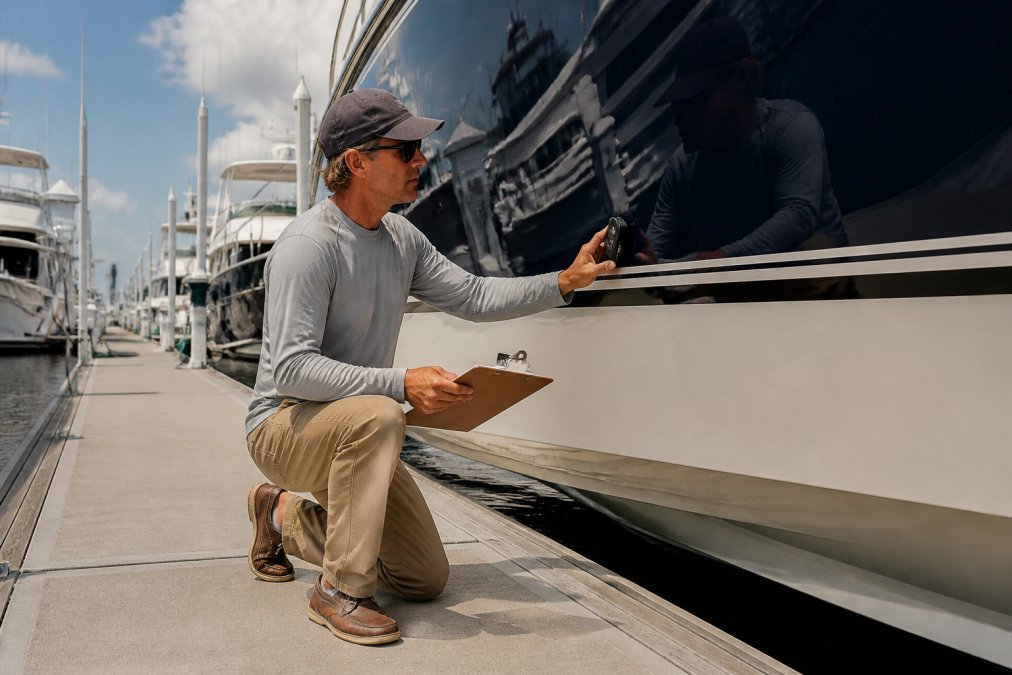
The sequence usually runs like this:
- Accept the vessel subject to survey, with a deposit held in escrow
- Commission a surveyor independent of the seller
- Haul the vessel for a bottom inspection and moisture readings
- Run the sea trial with a captain or mechanic aboard
- Review the survey report and negotiate repairs or price adjustments
- Close, or walk away if the findings are serious enough
The American Boat and Yacht Council standards library is the reference point surveyors and technicians work from, and a broker who knows those standards can read a survey report and tell you which findings are cosmetic and which are deal-breakers. Expect the survey to surface something. Every used vessel has a list. The question is whether the list is negotiable or disqualifying.
The survey is your use point. A broker who negotiates repairs and price credits at this stage typically recovers far more than their commission in value.
Yacht Purchase Agreement Legal Tips for Bahamas Transactions
A yacht purchase agreement governs everything from deposit to closing, and in a cross-border transaction it is where most of the risk lives. It should specify the vessel and hull identification number, price, deposit and escrow terms, closing date and location, conditions of sale, and default remedies. Every clause matters, but a handful carry outsized weight when the vessel is flagged, registered, or cruised outside the United States.
Clauses to scrutinize:
- Deposit handling: confirm the deposit sits in a segregated escrow or trust account, not the broker's operating account, and identify the escrow agent.
- Survey contingency: the agreement must give you the right to reject the vessel based on survey findings and specify how the deposit is returned if you do.
- Title and lien search: verify no outstanding mortgages, preferred ship mortgages, or maritime liens attach to the hull. A title abstract from a documentation service is standard.
- Closing documents: bill of sale, title transfer, Coast Guard documentation or state registration, and any deletion or endorsement of existing encumbrances.
- Governing law and dispute resolution: know which jurisdiction applies and whether disputes go to arbitration or court.
- Delivery terms: where and when the vessel changes hands, who pays for fuel, and what condition it must be in at delivery.
Flag state, registration, and documentation. A vessel's flag determines which registration and documentation rules apply. A U.S.-flagged vessel is typically documented through the U.S. Coast Guard National Vessel Documentation Center or registered with a state. A foreign-flagged vessel follows its own flag state's registration regime, and the purchase agreement should state clearly which flag the vessel will carry after closing and who is responsible for the transfer.
Customs and cruising permits. A vessel entering Bahamian waters is subject to that country's customs and cruising permit requirements, including a cruising permit, a fishing permit if applicable, and associated fees. These run parallel to delivery, so your broker or maritime attorney should confirm the sequence to avoid the vessel sitting at the dock accruing fees while paperwork is sorted.
Tax considerations. Sales and use tax depends on where the vessel is delivered, registered, and used. Some states cap or reduce vessel sales tax; some do not. A documented delivery outside certain jurisdictions can affect exposure, but rules are fact-specific and change. This is attorney and accountant territory, a good broker will say so plainly.
Maritime liens and the priority problem. Maritime liens can attach for unpaid crew wages, fuel, repairs, and other services, and they follow the hull across ownership changes if not properly cleared. A title search and lien release at closing are not optional, this is one of the most common places an unrepresented purchase goes wrong.
The unique angle here: most guides treat the purchase agreement as a generic contract checklist. In a cross-border transaction, the agreement has to answer flag-state, customs, permit, and tax questions that a domestic purchase never raises. Bring your own maritime attorney, and make sure your broker works alongside counsel rather than around them.
Broker vs. Direct Booking: Which Saves You More?
Direct booking looks cheaper because no commission line appears on the invoice, but that framing misses the real cost. A broker brings availability across multiple listings, destination expertise in the cruising grounds you care about, negotiation leverage, and a documentation process that catches problems before closing.
Where direct deals go wrong: undisclosed damage, unclear title, missing service records, and no advocacy when the survey turns up something expensive. Where brokers earn their keep: they know the market, they know which listings are stale, and they know when a seller will move on price.
Buyers purchasing a sportfish yacht, center console, or superyacht above entry-level pricing, where a survey finding or title issue can cost more than the commission itself.
A broker also handles the logistics most buyers underestimate: provisioning coordination, berthing arrangements, crew introductions, and post-closing support. That last piece matters. The International Yacht Brokers Association maintains a code of ethics its members agree to follow, which gives you a formal channel if a transaction goes sideways after closing.
Spencer Christopher Yacht and Ship was built for exactly this gap. Our team combines four decades of cumulative experience across USCG captain licenses, former crew work, and marine engineering, and we handle closings through an in-house department. Buyers working with us get fiduciary representation from first showing to final delivery, whether the vessel sits on the Eastern Seaboard or in Bahamian waters.
Buying a yacht without representation means absorbing every risk yourself: title defects, survey surprises, and negotiation you are not positioned to win. Spencer Christopher Yacht and Ship offers fiduciary care from first showing to delivery, with brokers holding USCG master licenses, CPYB certification, and hands-on marine engineering backgrounds, plus an in-house closing department. Get started with Spencer Christopher Yacht and Ship and buy or sell your vessel with representation that actually works for you.
Frequently Asked Questions
How much does a yacht broker charge?
Yacht broker commission rates are typically a percentage of the final sale price, though some brokers may negotiate rates for higher-value vessels. This commission is usually paid by the seller, not the buyer, which means buyers often get professional representation at no direct cost. Always ask for the commission structure in writing before signing any agreement so there are no surprises at closing.
What should I look for when hiring a yacht broker for international waters?
Look for a broker with a valid yacht broker license, membership in recognized associations like IYBA, and direct experience with Bahamas cruising grounds. Ask whether they hold a USCG captain's license and whether they have personally navigated the routes your vessel will travel. A broker who understands maritime regulations, cruising permits, and provisioning for the Exumas or Nassau will catch issues that a generalist misses. Request references from clients who purchased similar vessels in the region.
How does a yacht broker assist with import regulations and taxes?
A knowledgeable yacht broker coordinates with maritime attorneys and customs specialists to handle Bahamas import regulations, VAT services, and cruising permit applications. They help you understand whether your vessel qualifies for temporary import status and what documentation the Bahamas Customs Department requires. Your broker should also flag any U.S. tax implications of owning a foreign-flagged vessel. This coordination prevents costly delays at the port of call and ensures your yacht purchase agreement reflects the correct ownership structure.
Do I need a local broker to buy a yacht in the Bahamas?
You do not legally need a local broker, but working with one who knows Bahamas waters, marinas, and regulations saves significant time and money. A local broker has relationships with surveyors, maritime attorneys, and berthing managers in Nassau and the Exumas. They understand seasonal pricing, vessel availability, and the specific legal requirements for foreign buyers. An out-of-area broker can still represent you, but they will rely on local partners for inspections and closing logistics, which can add friction to the process.