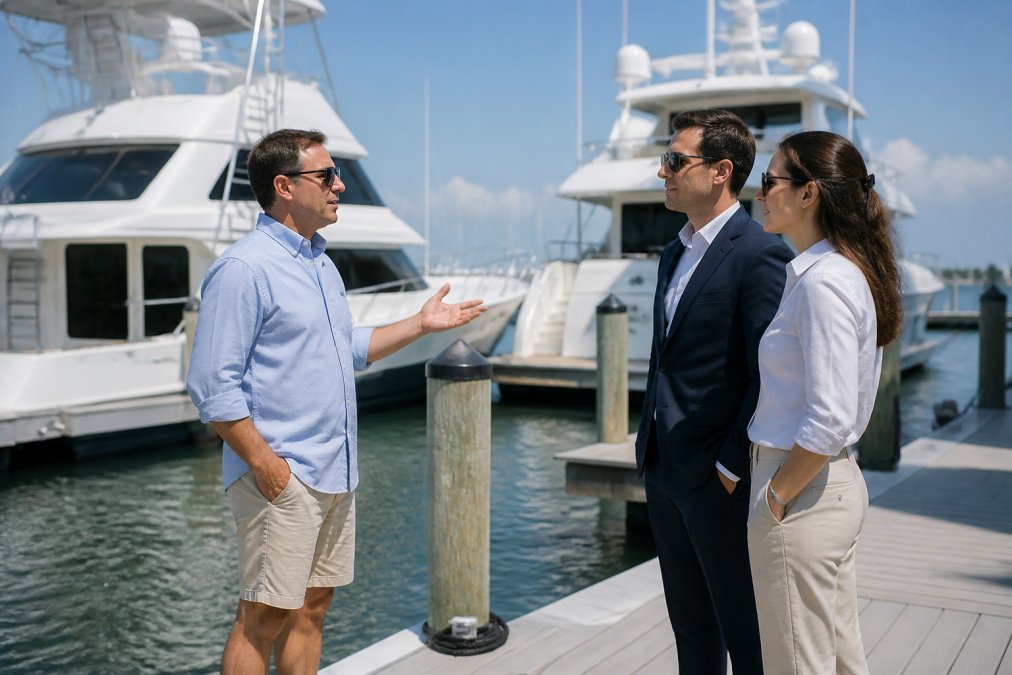
 comparison
Independent vs Corporate Yacht Broker: Which Fits Your Needs
Table of Contents
- Independent Yacht Brokers vs Corporate Brokerages: Key Differences
- Understanding Yacht Broker Commission Rates
- Fiduciary Duty in Yacht Purchase Transactions
- How to Vet a Yacht Broker Before Committing
- Roles and Responsibilities: What Each Model Delivers
- Post-Sale Support and Long-Term Partnership
- Making Your Choice: Independent or Corporate
- Frequently Asked Questions
Last Updated: September 3, 2026
Independent Yacht Brokers vs Corporate Brokerages: Key Differences
When buying or selling a yacht, the brokerage model you choose fundamentally shapes your transaction experience. An independent yacht broker vs corporate brokerage represents more than size, it's a structural choice about fiduciary responsibility, conflict management, and problem-solving during complications.
Spencer Christopher Yacht and Ship operates as an independent brokerage. Independent brokers answer directly to their clients. Corporate brokerages balance multiple stakeholders: shareholders, regional offices, inventory systems, and hierarchies that create competing priorities.
The distinction isn't about which is universally "better," but about alignment. A corporate firm might offer global reach; an independent broker might offer deeper expertise in specific vessel types and markets. The question is whether their incentive structure aligns with yours.
Here's the core difference: An independent broker's revenue depends entirely on client satisfaction and referrals. A corporate brokerage's revenue flows from multiple channels, management contracts, charter operations, new builds, financing. That structural difference cascades through every interaction.
Understanding Yacht Broker Commission Rates
Commission structures reveal how brokers are incentivized, and this is where the independent vs corporate distinction becomes financial.
Most brokers operate on commission, typically 5-10% of sale price, split between buyer's and seller's brokers. The structure differs significantly between models.
Independent brokers work on straightforward commission splits. They earn money only when a transaction closes. This creates clean incentive alignment: your deal closing is their revenue. During negotiation, an independent broker has strong motivation to find creative solutions rather than walk away.
Corporate brokerages operate on layered commission models. A broker employed by a corporate firm might earn base salary, commission splits, bonuses tied to inventory turnover, and performance metrics tied to regional targets. Closing your specific deal isn't their only revenue source. They might be indifferent between closing your $2M transaction or managing a $5M yacht in their charter fleet.
Corporate brokerages also retain a percentage of commissions at the corporate level for overhead and marketing. An independent broker retains the full commission (after closing costs), meaning more of your deal value stays with the person representing you.
| Aspect | Independent Broker | Corporate Brokerage |
|---|---|---|
| Revenue Source | Commission on closed deals only | Salary + commission + other revenue streams |
| Commission Retention | Full commission (minus closing costs) | Split with corporate office |
| Incentive Alignment | Direct: your deal = their income | Indirect: multiple revenue sources |
| Negotiation Flexibility | High motivation to solve problems | May prioritize other deals |
| Transparency | Direct conversation with commission recipient | Multiple layers between you and revenue chain |
Fiduciary Duty in Yacht Purchase Transactions
Fiduciary duty means the broker is legally obligated to put your interests above their own. But this works differently depending on brokerage model.
In most states, a broker can represent either buyer or seller, but not both on the same transaction (nysba.org). However, corporate structure creates complexity: a broker employed by a large firm might represent the buyer, but the firm itself might have financial interests in the seller's side through management contracts, financing, or other services.
An independent broker operates with clear fiduciary responsibility to their client. There are no competing internal interests. If a survey reveals a $200K engine problem, an independent broker has no institutional pressure to downplay it or rush closing. They have incentive to ensure you understand the full picture so you don't regret the purchase and damage their referral network.
A corporate broker faces institutional pressure that can subtly undermine fiduciary duty. Corporate management might incentivize quick closings. Corporate finance divisions might have preferred lenders. Corporate insurance partners might get referrals. None of this is necessarily illegal, but it creates competing interests that complicate pure client advocacy.
Maritime law governing yacht sales includes disclosure requirements around vessel condition, title, and liens (uscg.mil). But what counts as "material" can be interpreted differently depending on whether the broker is motivated to close the deal or protect the buyer.
How to Vet a Yacht Broker Before Committing
Before hiring any broker, verify their expertise and fiduciary commitment.
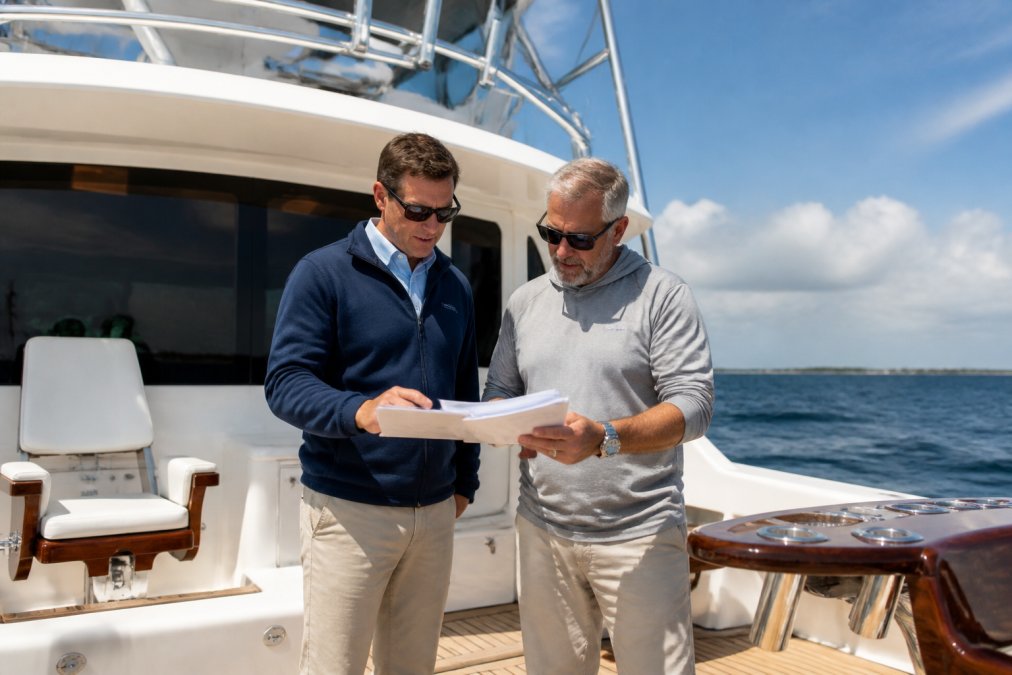
Start with credentials. The Certified Professional Yacht Broker (CPYB) designation requires documented experience and exam passage. The International Yacht Brokers Association (IYBA) maintains member standards. Christopher Cooke at Spencer Christopher Yacht and Ship holds the CPYB designation and maintains a U.S. Coast Guard 100-gross-ton Master license.
Second, ask about post-sale support. A broker who remains involved after closing demonstrates confidence in the transaction and commitment to the relationship.
Third, verify expertise in YOUR vessel type. Ask specific technical questions about hull condition issues, engine comparisons, or model-year problems. Specific answers indicate hands-on experience.
Fourth, ask about conflicts of interest directly. Does the brokerage have ownership stakes in other maritime businesses? Do they finance deals or manage yachts? An independent broker typically operates a single business: brokerage.
Fifth, request references from recent transactions. Call them and ask whether the broker told them things they didn't want to hear and whether they prioritized client interests when problems arose.
Finally, assess communication style. A broker who explains WHY they're recommending something is more credible than one who just tells you what to do.
Roles and Responsibilities: What Each Model Delivers
An independent broker's responsibilities center on client representation: vessel marketing, buyer identification, showings, inspections, negotiation, survey coordination, title verification, closing coordination, and post-sale support. You have one central point of contact.
Many independent brokers have USCG captain licenses, marine engineering backgrounds, or crew experience (uscg.mil). They're maritime professionals who can assess vessel condition themselves.
A corporate brokerage divides responsibilities across departments: listing agents, marketing, administrative staff, transaction coordinators, and regional management. This creates distance between you and decision-making authority but can handle multiple transactions simultaneously across regions.
Corporate brokerages excel at global marketing reach, brand recognition, large buyer databases, and coordinated multi-region services. But they lack the flexibility of independents. An independent broker can negotiate creatively on commission, adjust timelines, or spend extra time on challenging closings. A corporate broker works within corporate policies and quarterly targets.
When problems emerge, an independent broker can immediately pivot strategy with you. A corporate broker might need to consult management or follow corporate protocol.
Post-Sale Support and Long-Term Partnership
After closing, the broker's job is technically done. But experienced independent brokers understand that closing begins the relationship, not ends it.
Problems emerge: mechanical issues not visible during survey, crew transitions, insurance questions, registry documentation. An independent broker with years in the business has built a network of specialists: surveyors, mechanics, captains, insurance brokers, maritime attorneys. When you call three months after closing, they can connect you with trusted resources. Your satisfaction affects their reputation and referral network.
A corporate brokerage's post-sale support is often contractual and limited. You get a closing statement and title company contact. The broker has moved to the next transaction.
For high-net-worth individuals purchasing vessels, this difference matters. A broker who remains accessible and connected to specialists can save time and money.
Independent brokers also develop deeper knowledge of specific markets and vessel types. A broker in the sportfish market for 15 years knows which builders have chronic issues, which models hold value, and which regional markets are soft or hot. Corporate brokers rotate between regions more frequently, so institutional knowledge stays with the corporation.
Making Your Choice: Independent or Corporate
The decision depends on your priorities and transaction complexity.
Choose an independent broker if: You value direct access to decision-making authority. You want a broker who understands your specific situation rather than moving through a transaction pipeline. You're buying or selling a sportfish yacht where specialized knowledge matters. You want post-sale support and a long-term relationship. You prefer transparent communication about conflicts and market reality. You value fiduciary clarity: one person, one client, one incentive.
Choose a corporate brokerage if: You're buying or selling a superyacht requiring global marketing. You need coordinated services across multiple regions. You prefer brand recognition and institutional credibility. You want access to large buyer or seller databases. You're comfortable with a transactional relationship ending at closing.
The independent vs corporate distinction isn't about ideology, it's about structure. Independent brokers operate with aligned incentives: your deal closing means their revenue. Corporate brokers operate within institutional frameworks that can create competing priorities.
For most yacht buyers and sellers on the Eastern Seaboard and Bahamas, an independent broker with deep expertise in your vessel type and transparent fiduciary commitment delivers more value. Spencer Christopher Yacht and Ship brings together USCG captains, former yacht crew, and marine engineers with over four decades of combined experience, delivering complete fiduciary care from first showing to final delivery with in-house closing support and post-sale partnership.
The question isn't which model is universally superior. It's which model aligns your interests with your broker's interests. When those align, negotiation, problem-solving, transparency, and support flow from that foundation.
Choosing the right yacht broker shapes your entire transaction experience. An independent broker with transparent fiduciary commitment and deep expertise in your vessel type eliminates friction that emerges when institutional interests complicate client advocacy. Spencer Christopher Yacht and Ship combines independent brokerage structure with USCG-licensed brokers, in-house closing coordination, and post-sale support extending beyond closing. Get started with Spencer Christopher Yacht and Ship and experience a brokerage model built around your interests, not institutional complexity.
Frequently Asked Questions
Q: What is the average commission for a yacht broker?
A: Yacht broker commission rates typically range from 5% to 10% of the sale price, split between the buyer's and seller's representatives. The exact percentage depends on the vessel's size, sale price, market conditions, and the brokerage model. Always clarify commission structure in writing before engaging a broker to avoid surprises at closing.
Q: What is fiduciary duty in a yacht purchase, and how does it differ between independent and corporate brokers?
A: Fiduciary duty means the broker must prioritize your interests above their own financial gain. Independent brokers often maintain closer client relationships, making it easier to demonstrate this duty through personalized oversight of inspections, negotiations, and closing. Corporate brokerages, while bound by the same legal standard, may distribute this responsibility across multiple departments, potentially creating delays or conflicts when representing both buyer and seller in the same transaction.
Q: How do I verify a yacht broker's credentials and experience?
A: Request proof of licensing, bonding, and professional certifications such as Certified Professional Yacht Broker (CPYB) status. Ask about team members' backgrounds, USCG captain licenses, marine engineering credentials, and years in the industry signal real expertise. Check membership in organizations like the International Yacht Brokers Association (IYBA) or local yacht broker associations. Request references from recent clients and ask specifically about vessel inspections or issues they caught that saved money.
Q: What happens after closing, do brokers provide post-sale support?
A: Post-sale support varies significantly. Independent brokers with in-house closing departments and technical expertise often remain available for transition guidance, mechanical issues, and documentation questions. Corporate brokerages may hand off responsibility after closing. Before selecting a broker, ask explicitly about post-closing support, warranty follow-up, and how they handle disputes or unexpected mechanical problems discovered within 30-90 days of delivery.