 ultimate-guide
Post Purchase Yacht Transition Support: A 2026 Guide
Table of Contents
- What Post Purchase Yacht Transition Support Actually Covers
- The Yacht Handover Process: What to Expect Step by Step
- Yacht Maintenance Checklist for New Owners
- Registration, Flag State, and USCG Documentation
- Yacht Management After Purchase: Crew, Insurance, and Budgeting
- Tax, VAT, and Financial Documentation for New Owners
- The Psychological Transition to Yacht Ownership
- How Ongoing Post Purchase Yacht Transition Support Works
- Frequently Asked Questions
Last Updated: September 1, 2026
What Post Purchase Yacht Transition Support Actually Covers
Post purchase yacht transition support is the structured process of guiding a new vessel owner through every operational, legal, and logistical step that follows closing. Most buyers focus intensely on acquisition, then discover the real complexity begins after the wire transfer clears.
The scope of yacht transition support covers several distinct categories: legal and documentation (USCG documentation, state titling, flag state compliance), technical (sea trial verification, survey reconciliation, maintenance scheduling), operational (crew recruitment, insurance underwriting, budgeting), financial (tax structuring, VAT considerations, accounting setup), and psychological adjustment to vessel ownership.
What most guides get wrong is treating these as sequential steps. Registration, insurance, and initial maintenance decisions all need to happen in parallel, often within the first two to four weeks of ownership. A yacht transition support plan that accounts for this overlap is worth considerably more than one that doesn't.
The Yacht Handover Process: What to Expect Step by Step
The yacht handover process is the formal transfer of a vessel from seller to buyer, encompassing physical inspection, documentation exchange, systems orientation, and final sea trial confirmation. Done well, it takes one to two full days.
Here's what a properly structured handover covers:
- Pre-handover survey review: Confirm all agreed repairs from the marine survey report are complete and documented
- Systems walkthrough: Engine room, electronics, safety equipment, tender, and ground tackle
- Sea trial: Final confirmation of vessel performance under load
- Documentation transfer: All manuals, warranty cards, registration documents, and spare parts inventory
- Digital asset transfer: Chartplotter waypoints, security codes, monitoring app credentials, and service records
- Key handover: Physical keys, fob codes, and marina access credentials
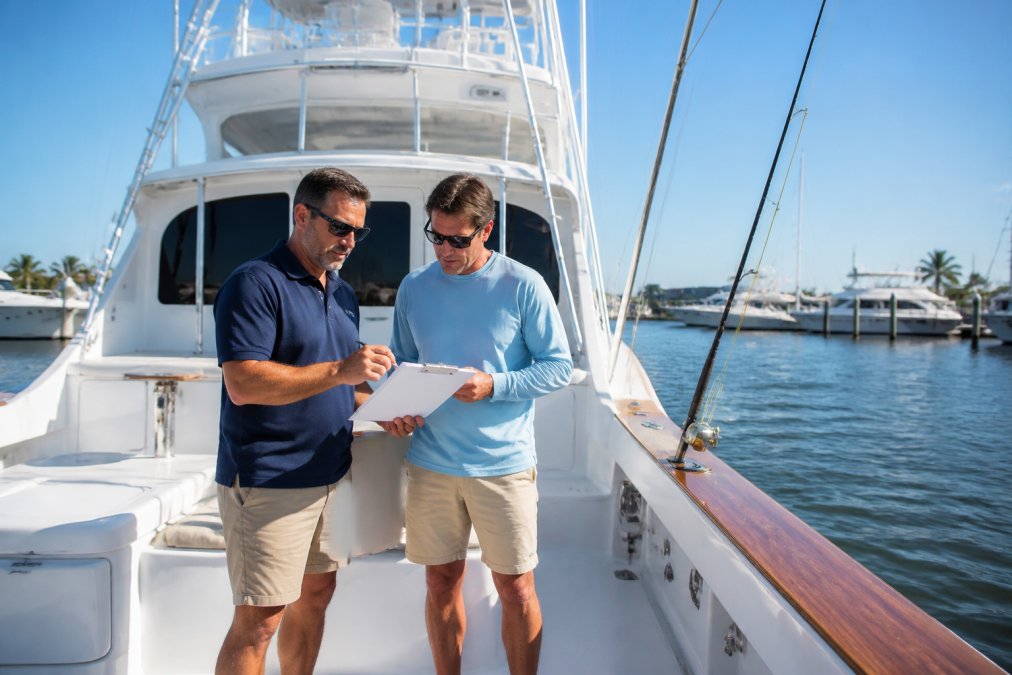
A common mistake is accepting a handover without a written punch list. Every item flagged in the survey report and every repair the seller agreed to should be signed off individually before you take possession.
Sea Trial and Technical Assessment at Handover
The sea trial at handover is your last opportunity to verify that the vessel performs as represented before the transaction is fully settled. Request engine room temperature readings and exhaust water flow checks at operating RPM, these two data points catch more latent problems than any visual inspection.
Documentation, Keys, and Digital Asset Transfer
Digital asset management is one of the most overlooked components of the yacht handover process. Modern vessels carry a significant digital footprint: FLIR camera systems, satellite communication accounts, engine monitoring platforms, marina reservation portals, and AIS transponder registrations. Each requires a formal credential transfer.
A practical digital asset checklist includes chartplotter and MFD waypoint export files, satellite phone account transfer, engine monitoring platform login reassignment, marina and fuel dock account updates, vessel tracking codes, and manufacturer warranty registrations in the new owner's name. Failing to transfer these assets creates operational gaps that can take months to untangle.
Yacht Maintenance Checklist for New Owners
A yacht maintenance checklist for new owners is the foundational document that separates proactive vessel management from reactive, expensive repairs. The first 90 days of ownership set the maintenance culture for the entire ownership period.
First 30 Days: Preventative Maintenance Priorities
The first 30 days should focus on establishing baselines, not just fixing known issues.
| Priority | Task | Timing |
|---|---|---|
| Critical | Engine oil and filter change | Day 1-7 |
| Critical | Raw water impeller inspection | Day 1-7 |
| High | Fuel polishing and tank inspection | Week 2 |
| High | Through-hull and seacock exercise | Week 2 |
| Standard | Safety equipment inventory and expiry check | Week 3 |
| Standard | Bilge pump test and float switch verification | Week 3 |
| Ongoing | Log engine hours and establish service intervals | Monthly |
Sustainability Retrofitting and Green Upgrades
Sustainability retrofitting is increasingly relevant for owners operating in regulated coastal and Bahamian waters. The EPA's vessel general permit program sets discharge standards affecting how you manage bilge water, gray water, and exhaust emissions on vessels operating in U.S. waters.
Practical green upgrades worth evaluating in the first ownership year include LED lighting conversion, solar panel integration, watermaker efficiency upgrades, copper-free antifouling paint selection, and shore power management systems. These upgrades also improve resale value, vessels with documented sustainability improvements attract stronger buyer interest.
Registration, Flag State, and USCG Documentation
Registration and flag state compliance is the legal foundation of yacht ownership. For vessels operating primarily in U.S. waters, the U.S. Coast Guard National Vessel Documentation Center issues federal documentation that serves as the vessel's primary legal identity.
The key decisions at registration are flag state selection (most U.S.-based owners document under the American flag), preferred ship's mortgage recording if financed, and state titling vs. federal documentation compliance. The yacht documentation process typically takes two to four weeks for initial USCG documentation. Owners planning international cruising should also obtain a U.S. Customs and Border Protection cruising permit.
Yacht Management After Purchase: Crew, Insurance, and Budgeting
Yacht management after purchase is the ongoing operational framework that keeps a vessel safe, crewed, insured, and financially accounted for across the full ownership lifecycle. The decisions made in the first 60 days tend to define the operational cost structure for years.
Crew Recruitment and Payroll Management
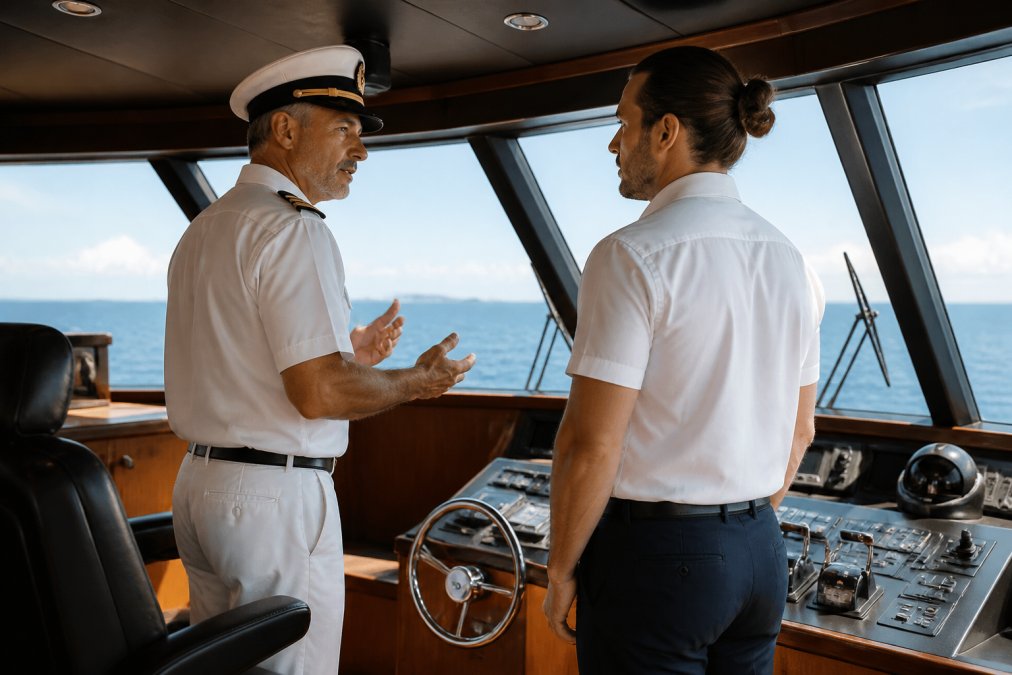
Crew placement for a private yacht involves employment contracts, payroll tax obligations, and compliance with maritime labor standards. The Maritime Labour Convention compliance guidance and applicable U.S. labor regulations govern crew employment arrangements.
For sportfish and mid-size superyachts, most owners retain one to three full-time crew. Key considerations include USCG licensing requirements for captains, employment vs. contractor classification (the IRS applies specific tests to maritime crew; misclassification is a common and costly error), and dedicated maritime payroll systems that handle specific tax withholding and reporting requirements.
Crew recruitment through a specialized maritime placement service typically produces better long-term retention. Verify references directly and require candidates to provide current USCG credentials and documented sea service records.
Insurance Underwriting and Risk Coverage
A yacht insurance policy is a negotiated document reflecting the vessel's operating area, crew qualifications, intended use, and agreed hull value. Core components include hull and machinery coverage, protection and indemnity (third-party liability), medical payments, uninsured boater coverage, and agreed value vs. actual cash value options. Agreed value policies pay the insured amount without depreciation, which matters significantly on high-value vessels.
Insurance underwriting involves detailed review of the owner's experience, the captain's credentials, and the vessel's survey condition. A clean survey report and USCG-licensed captain typically produce better underwriting terms.
Operational Budgeting and Annual Expenditure
Plan for annual operating expenditure in the range of 10-15% of the vessel's purchase price, though actual costs vary based on vessel age, size, use intensity, and crewing model. Major categories include crew salaries, fuel and oil, marina fees, insurance, routine maintenance, unplanned repairs, provisioning, and registration fees. A detailed operational budget prevents financial surprises and informs decisions about charter income, which can offset a meaningful portion of annual costs.
Tax, VAT, and Financial Documentation for New Owners
Tax and VAT implications for yacht ownership are among the most consequential financial decisions a new owner makes. For U.S.-based owners, primary tax considerations include sales tax vs. use tax (rules vary significantly by state), depreciation for business use (vessels used in legitimate charter or business context may qualify for depreciation deductions), and LLC or entity ownership for liability isolation and potential tax benefits.
For owners who cruise internationally, VAT becomes relevant when operating in foreign jurisdictions. European waters carry specific VAT obligations for U.S.-flagged vessels. Consult the IRS guidance on vessel taxation for current federal treatment and work with a tax advisor experienced in maritime transactions for state-specific guidance.
Financial documentation best practices include opening a dedicated vessel operating account, retaining all maintenance invoices and improvement receipts, documenting charter income separately, and maintaining a vessel log recording hours, fuel consumption, and maintenance events.
The Psychological Transition to Yacht Ownership
The psychological transition to yacht ownership is real and rarely discussed. The purchase process is intensely goal-oriented; the moment it ends, a different kind of pressure begins. New owners often describe quiet anxiety about everything they don't yet know. This is normal and manageable.
Even experienced boaters face adjustment when transitioning to a larger or more complex vessel. A few observations from working with first-time owners: the first offshore passage resets expectations and provides invaluable real-world experience; crew dynamics take time to establish and require clarity about roles early; and something will break in the first season, budget for it and don't interpret it as a purchase failure. The owners who enjoy the experience most treat the first year as a learning investment.
How Ongoing Post Purchase Yacht Transition Support Works
Ongoing yacht transition support is a structured advisory relationship extending well beyond closing, providing new owners with access to technical, operational, and logistical expertise throughout the first full ownership cycle.
The distinction between a transaction-focused brokerage and a genuine post-purchase support model is stark. Most brokerages consider their obligation complete at delivery. A true yacht transition support framework continues through registration completion, insurance placement, crew onboarding, and the first scheduled maintenance interval.
What a comprehensive post-purchase yacht transition support engagement typically includes: registration and documentation coordination through USCG and state agencies, insurance broker introductions and policy review support, crew placement referrals and contract review guidance, maintenance schedule development based on survey findings, operational budget modeling for the first ownership year, and ongoing availability for technical questions and vendor referrals.
According to the International Yacht Brokers Association professional standards, the standard of care for yacht brokers includes post-transaction support as a component of fiduciary duty to the buyer. Ask any broker before signing: "What does your support look like after the keys are handed over?" The answer tells you everything.
Buying a yacht is the beginning of a complex operational commitment, and the weeks immediately after closing are when most new owners feel most exposed. Spencer Christopher Yacht and Ship provides comprehensive post purchase yacht transition support grounded in four decades of cumulative experience from USCG captains, engineers, and former crew who've operated these vessels, not just sold them. From USCG documentation and insurance placement to crew onboarding and first-season maintenance planning, our team stays engaged well past delivery. Contact Spencer Christopher Yacht and Ship to discuss how we support the full transition, not just the transaction.
Frequently Asked Questions
What does post purchase yacht transition support include?
Post purchase yacht transition support covers everything that happens after closing: vessel registration and USCG documentation, the formal handover process, sea trials, crew placement, insurance underwriting, and setting up a yacht maintenance schedule. A broker with real vessel experience, USCG captains and engineers, can coordinate these moving parts so mechanical issues, compliance gaps, or documentation errors don't surface weeks after the sale. The goal is to make you fully operational, not just legally the owner.
How do I handle yacht registration and documentation after purchase?
Most vessels over 5 net tons used in U.S. waters qualify for USCG documentation through the National Vessel Documentation Center. You'll need a completed CG-1258 application, a bill of sale, proof of citizenship, and measurement data. State registration may also apply depending on how and where you operate. A yacht broker with an in-house closing department can prepare and file these documents as part of the handover process, reducing the risk of errors that delay your ability to legally operate the vessel.
What are the most common maintenance issues for new yacht owners?
New owners most often encounter raw water cooling system failures, corroded electrical connections, neglected impeller replacements, and outdated safety gear. Diesel engines require strict service intervals, and many buyers discover the previous owner deferred maintenance that a pre-purchase survey didn't fully quantify. A structured yacht maintenance checklist for new owners, covering engine hours, through-hulls, electronics, and standing rigging, helps you catch these early. Scheduling a post-purchase technical assessment within the first 30 days is the most effective way to baseline the vessel's condition.
Do yacht brokers provide support after the closing date?
Most large corporate brokerages hand off the keys and move on. An independently owned brokerage with USCG-licensed captains and engineers on staff can provide genuine post purchase yacht transition support: coordinating the formal handover, connecting you with vetted crew, overseeing refit management, and staying available when mechanical or compliance questions arise. The difference is whether your broker has real vessel experience or is primarily a salesperson. Ask specifically what post-closing services are included before you sign.