 how-to
Yacht Purchase Closing Process Steps: 2026 Guide
Table of Contents
- Step 1: The Offer and Purchase Agreement
- Step 2: Yacht Marine Survey Checklist and Sea Trial
- Step 3: Yacht Escrow Account Process and Fund Handling
- Step 4: Yacht Purchase Agreement Legal Tips for Closing
- Step 5: Tax Implications and Jurisdictional Differences
- Step 6: Ownership Transfer, Registration, and Documentation
- Step 7: Post-Closing Logistics and Maintenance Handover
- Conclusion
- Frequently Asked Questions
Last Updated: September 16, 2026
Step 1: The Offer and Purchase Agreement
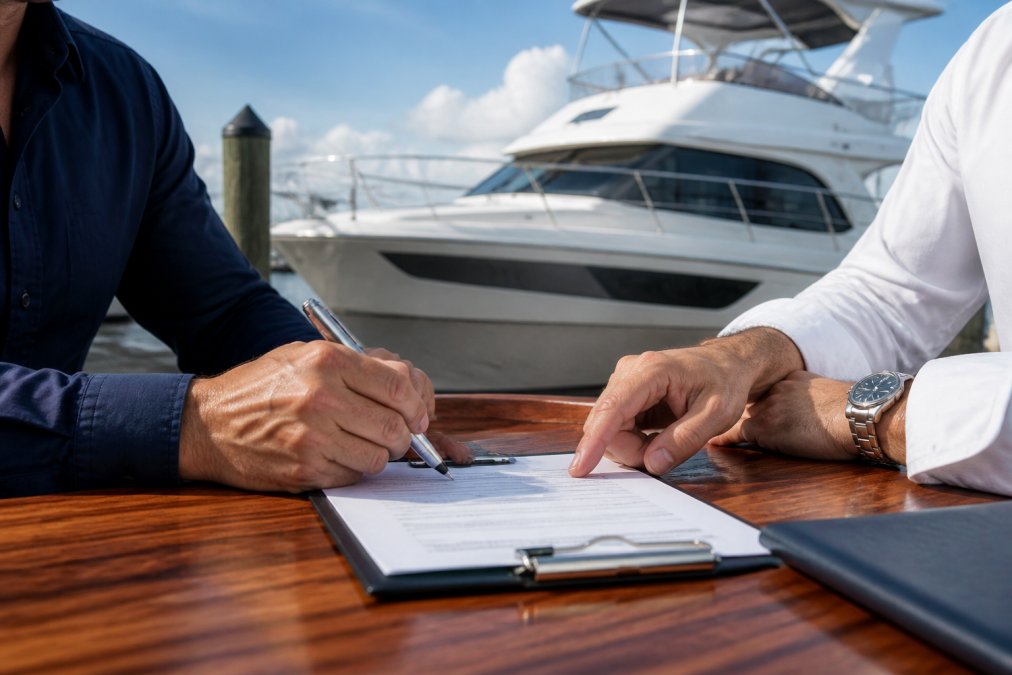
The yacht purchase closing process steps begin the moment a buyer submits a written offer, and every subsequent stage depends on how carefully that first document is drafted. A purchase agreement is the binding contract that sets the vessel's price, deposit terms, contingencies, and the timeline for the entire transaction.
A common mistake is signing a brokerage's standard form without negotiating survey and sea trial contingencies that protect the buyer if the vessel fails inspection.
Here's what a solid offer package includes:
- Purchase price and deposit amount, typically held in escrow
- A defined inspection period for the marine survey and sea trial
- Financing contingency language if a lender is involved
- A closing date and location, plus remedies if either party defaults
Get this wrong and you'll renegotiate everything later, usually from a weaker position. For a plain-language walkthrough of contract terms, the U.S. Coast Guard boating safety and documentation resources are a useful starting reference.
Step 2: Yacht Marine Survey Checklist and Sea Trial
A yacht marine survey checklist is the buyer's most valuable protection, covering hull integrity, engines, electrical systems, rigging, and safety equipment. The survey and sea trial together confirm the vessel performs as represented before funds move.
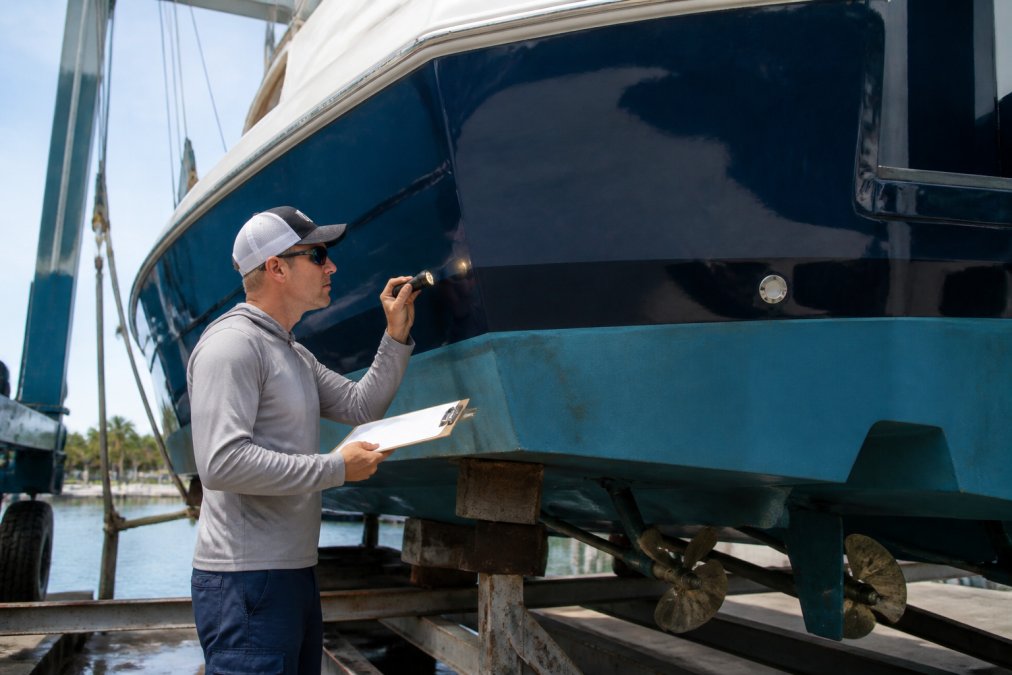
Most guides gloss over this, but the survey is where deals quietly die or get repriced. A thorough surveyor will flag moisture intrusion, delamination, and engine-hour discrepancies that a casual showing never reveals.
The sea trial should push the vessel to its operating range: full throttle runs, docking maneuvers, and a systems check underway. Insist on a mechanic's engine survey separate from the general hull survey.
Step 3: Yacht Escrow Account Process and Fund Handling
The yacht escrow account process protects both parties by holding the deposit and purchase funds with a neutral third party until closing conditions are met. A licensed escrow agent or title company releases funds only when the bill of sale is signed and title transfers cleanly.
Wire transfers should be verified by phone with the escrow agent before sending, never by email alone. Wire fraud targeting large vessel transactions is real, and a single misdirected transfer is nearly impossible to recover.
Step 4: Yacht Purchase Agreement Legal Tips for Closing
Solid yacht purchase agreement legal tips start with involving a maritime attorney early, not after problems appear. Your attorney reviews title, lien clearance, and vessel encumbrances before you commit funds. Spencer Christopher Yacht and Ship maintains an in-house closing department, but we never push back if a buyer wants their own maritime counsel. In fact, we encourage it. Independent legal review protects everyone and speeds the closing because surprises surface early.
The legal work at closing comes down to a short list of documents, and each one has a specific failure mode:
- Title search and lien release. For a federally documented vessel, the abstract of title is pulled from the U.S. Coast Guard National Vessel Documentation Center. Any recorded preferred mortgage must be satisfied and a release of lien recorded before or simultaneously with the transfer. For a state-titled vessel, the equivalent search runs through the state titling agency, and any lienholder must sign off on the title before it can be reissued clean.
- Bill of sale. The transfer instrument itself. It should identify the vessel by hull identification number (HIN), official number or state registration number, and engine serial numbers, and it should warrant title free of encumbrances. A bill of sale that omits the HIN or engine numbers is a common source of registration delays weeks later.
- Notarization. Most states require the bill of sale and often the title assignment to be notarized. Notary requirements vary by state, so confirm the form your state accepts before closing day rather than after.
- Apostille or consular legalization. Needed only when a signer, an entity, or a prior registration is foreign. The U.S. Department of State issues apostilles for documents destined for countries in the Hague Apostille Convention; other destinations may require consular legalization instead. Build extra weeks into the timeline if this applies.
- Entity authorization. If the buyer is an LLC or corporation, the closing package needs a resolution or operating agreement excerpt authorizing the purchase and identifying who may sign. Without it, the escrow agent may refuse to disburse.
A practical sequence that avoids rework: order the title search as soon as the purchase agreement is signed, request payoff letters from any lienholders during the survey period, and have your attorney circulate draft closing documents for review at least several business days before the closing date.
Watch these items closely:
- Title search confirming no outstanding liens or loans, with the release recorded
- Notarization requirements for the bill of sale and title assignment in the relevant state
- Apostille documentation if the vessel or an owner is registered abroad
- HIN and engine serial verification against the physical vessel before signing
Step 5: Tax Implications and Jurisdictional Differences
The main categories to separate:
- Sales tax. Imposed by the state where the sale is sourced, which is often the state of delivery rather than the seller's location. Rates and caps vary widely, and several states cap the taxable amount on vessel sales, so the effective rate can be far lower than the headline rate.
- Use tax. Applies when a vessel is brought into a state without sales tax having been paid. Many states offer a credit for sales tax already paid elsewhere, but the credit is often partial and sometimes expires if too much time passes between purchase and import.
- Documentation versus registration tax treatment. A federally documented vessel and a state-registered vessel can be treated differently for tax purposes in the same state. Some states exempt documented vessels from certain local property taxes; others do not.
- Cruising and temporary-use rules. Most states allow a limited window of temporary use before use tax is triggered. The length of that window and how it is counted differ by state, and the clock can start on delivery rather than on registration.
Keep these records with the closing file: the executed bill of sale showing delivery location and date, proof of any sales tax paid, the registration or documentation application, and a log of where the vessel was physically located during the first months of ownership. If a state later questions use tax, that file is the difference between a quick resolution and an assessment.
Step 6: Ownership Transfer, Registration, and Documentation
Vessel documentation with the U.S. Coast Guard and state registration are two different things, and buyers routinely confuse them. Federal documentation establishes nationality and is required for certain financing and offshore use; state registration covers in-state operation.
| Closing Item | Responsible Party | Typical Timing |
|---|---|---|
| Bill of sale execution | Buyer, seller, escrow | Closing day |
| Funds disbursement | Escrow agent | Closing day |
| Title transfer recording | Closing department | Within days |
| Documentation or registration | Buyer | Within weeks |
| Insurance binder activation | Buyer | Before delivery |
Step 7: Post-Closing Logistics and Maintenance Handover
The closing isn't finished when the money moves. Moorage or dockage arrangements, crew employment, and the vessel's operating budget need to be settled before you take the helm.
Conclusion
The final steps of any yacht purchase closing are where careful buyers separate themselves from the rest. Documentation, tax planning, and a clean maintenance handover decide whether ownership starts smoothly or turns into months of expensive corrections.
Frequently Asked Questions
What are the essential steps in a yacht purchase closing?
The closing process typically begins with an accepted offer and signed purchase agreement, followed by a marine survey and sea trial to verify vessel condition. Funds are then deposited into an escrow account while the broker conducts a title search and lien clearance. Once all contingencies are met, closing documents are signed, funds are disbursed, and ownership transfers via a bill of sale and registration. Finally, post-closing logistics like dockage and insurance take effect.
How long does the yacht closing process typically take?
Timelines vary based on vessel complexity, financing, and survey findings. A straightforward cash purchase of a center console might close in one to two weeks, while a superyacht with entity formation, international registration, and detailed surveys can take four to eight weeks or longer. The escrow and title search phases often dictate the pace, so working with an experienced broker and maritime attorney helps avoid unnecessary delays.
What documents are required to close on a yacht purchase?
Key closing documents include the purchase agreement, bill of sale, title search results, lien clearance letters, and a closing statement. For documented vessels, you'll need Coast Guard documentation or state registration forms. If financing is involved, the lender provides a security agreement and promissory note. Notarization is often required, and an apostille may be needed for international transactions. Your broker or attorney typically prepares a checklist to ensure nothing is missed.
How are funds handled during a yacht closing?
Funds are typically held in a licensed escrow account managed by a broker, title company, or attorney. The buyer wires the deposit and final payment via wire transfer to the escrow agent, who disburses funds to the seller and lienholders once all closing conditions are satisfied. This protects both parties by ensuring the seller receives payment only after the title is clear and the buyer takes ownership without encumbrances.
Buying a yacht should feel like the start of something great, not a legal obstacle course. Spencer Christopher Yacht and Ship combines four decades of cumulative marine experience with a dedicated in-house closing department, transparent fund handling, and representation that puts your interests first from first showing to final delivery. Get started with Spencer Christopher Yacht and Ship and close your next vessel with confidence.