 listicle
Yacht Survey Red Flags: 7 Deal-Breakers to Know
Table of Contents
- Yacht Survey Red Flags: What Makes a Finding a Deal-Breaker?
- The Quick Comparison: Red Flags by Severity
- 1. Structural Integrity: Delamination, Core Saturation, and Soft Spots
- 2. Moisture Intrusion and Osmotic Blistering: More Than Cosmetic
- 3. Electrical System Hazards: Corrosion, Electrolysis, and Faulty Wiring
- 4. Engine and Mechanical Failure Signs on the Sea Trial
- 5. Fuel System and Safety Equipment Deficiencies
- 6. Common Boat Survey Findings: Evidence of Poor or Amateur Repairs
- Marine Survey Report Interpretation and Negotiation
- Post-Survey Negotiation Tactics and Next Steps
- Frequently Asked Questions
Last Updated: September 5, 2026
A pre-purchase yacht survey is the single most important protection a buyer has, yet the report often reads like a foreign language. Misreading a minor maintenance note versus a structural deal-breaker can cost tens of thousands of dollars. At Spencer Christopher Yacht and Ship, our brokers are USCG captains and engineers who have walked hundreds of buyers through this process. This list cuts through the jargon to show which findings should end the deal, which are negotiation use, and how to tell the difference.
Yacht survey red flags are findings indicating significant structural, mechanical, or safety deficiencies requiring major repairs that typically exceed the vessel's value or pose immediate safety risks. A surveyor's job is to document condition, not to tell you whether to buy. Below, we break down the seven most serious categories, what they look like in a report, and how to respond.
Yacht Survey Red Flags: What Makes a Finding a Deal-Breaker?
Not every item on a survey report warrants walking away. A deal-breaker is a finding where the cost or risk of remediation outweighs the vessel's value, or where the issue compromises safety in a way that cannot be reasonably addressed. Minor gelcoat crazing, worn upholstery, or a dead bilge pump battery are maintenance items. Core saturation, structural delamination, or systemic electrical corrosion are in a different category entirely.
The critical distinction comes down to three questions. Does the issue affect structural integrity or seaworthiness? What is the realistic repair cost versus the purchase price? Does the finding suggest a pattern of deferred maintenance or amateur repairs that will continue surfacing after closing? If you answer yes to any, you are looking at a serious finding demanding further investigation or renegotiation.
The Quick Comparison: Red Flags by Severity
Before diving into each category, here is a practical framework for sorting findings by their impact.
| Severity | Example Finding | Typical Response | Financial Impact |
|---|---|---|---|
| Critical | Structural delamination, core saturation | Walk away or renegotiate heavily | Repair cost may exceed vessel value |
| High | Osmotic blistering, engine failure signs | Obtain repair quotes before closing | Significant, often five figures or more |
| Moderate | Electrical corrosion, aged fuel lines | Negotiate price reduction or seller repairs | Manageable but requires immediate attention |
| Low | Gelcoat cracking, minor leaks | Note for routine maintenance | Minimal, budget for future work |
This table reflects how professional brokers and surveyors typically categorize findings. The financial impact column is deliberately qualitative because actual costs vary widely by vessel size, material, and location. Your surveyor should provide repair estimates, and your broker should help you obtain competitive quotes before negotiating.
1. Structural Integrity: Delamination, Core Saturation, and Soft Spots
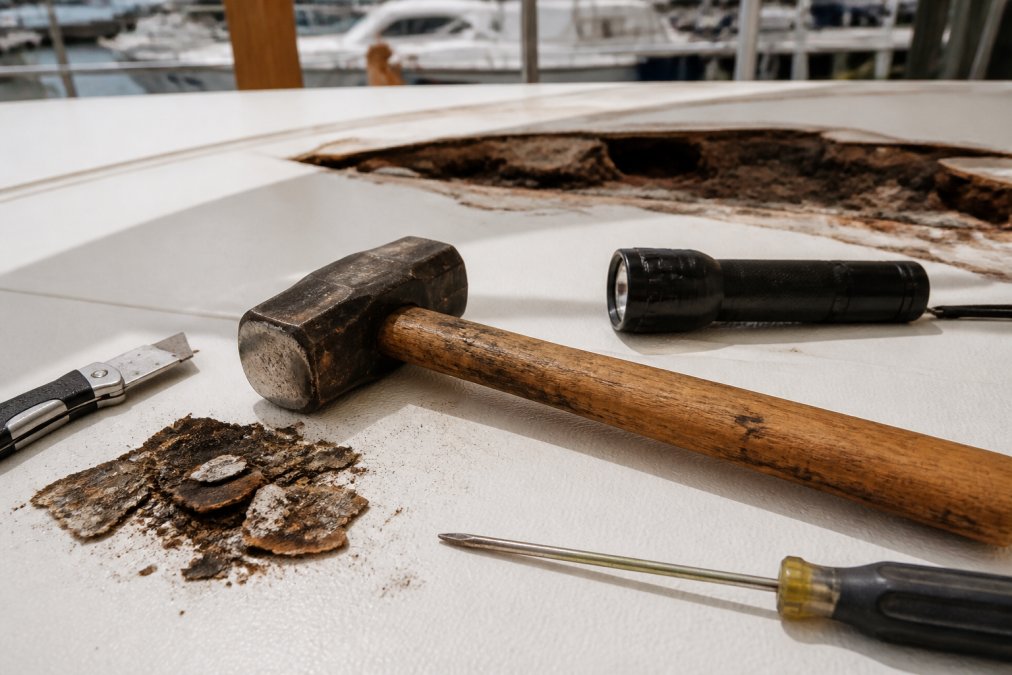
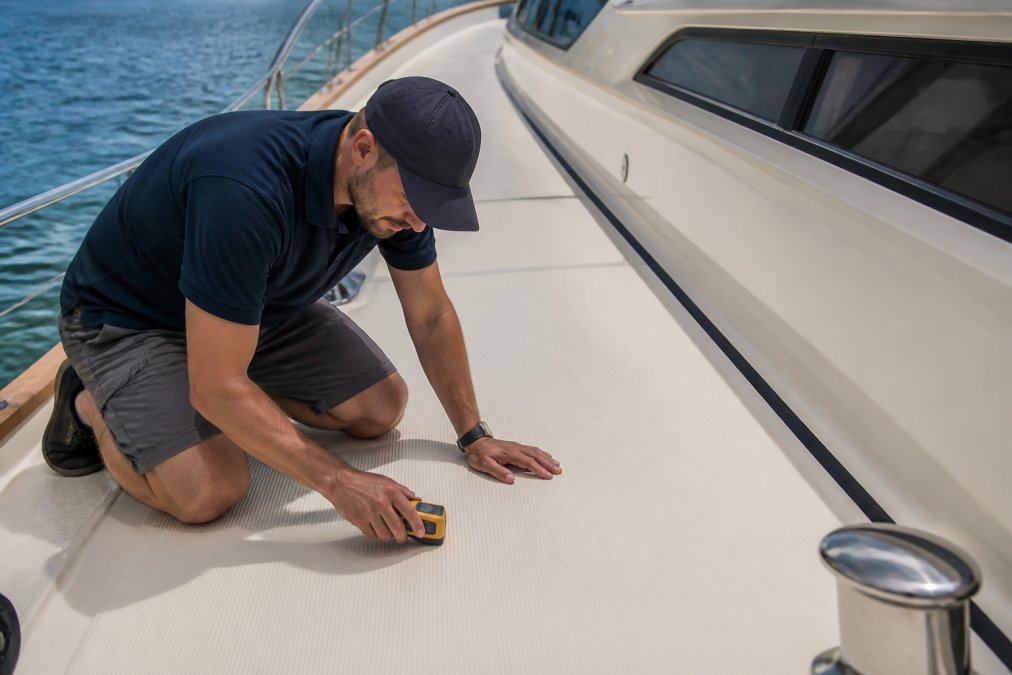
The hull is the vessel's foundation; any compromise to its structural integrity is the most serious category on any survey. Surveyors use moisture meters and tap testing to identify delamination, where fiberglass layers separate, and core saturation, where the balsa or foam core absorbs water. Soft spots on the deck or hull indicate the core has broken down and lost compressive strength.
These terms are not cosmetic. A saturated core cannot be dried and reused; it must be cut out and replaced, removing the fiberglass skin, replacing the core material, and rebuilding the layup. This labor-intensive process requires a qualified yard and can take weeks, making structural findings among the most common reasons buyers walk away.
Location matters. Transom rot is particularly serious because the transom supports the engines and absorbs propeller thrust. Similarly, deck core saturation around chainplates or stanchion bases can compromise rigging integrity on sailboats. Soft spots in these high-load areas should be treated as critical findings.
2. Moisture Intrusion and Osmotic Blistering: More Than Cosmetic
Moisture intrusion is the root cause of many structural problems, and osmotic blistering is its most visible symptom. It occurs when water penetrates the gelcoat and reacts with soluble materials in the layup, creating pressure that forms blisters below the waterline. While a few small blisters may be manageable, widespread blistering indicates the gelcoat has lost its integrity as a moisture barrier.
The surveyor's moisture meter readings are your best guide. High readings concentrated in one area suggest a localized problem, such as a leaking through-hull fitting. Widespread elevated readings suggest a systemic issue with the original layup or a failed barrier coat. Ask the surveyor to explain the readings and their likely cause before making decisions.
Repairing osmotic blistering involves stripping the gelcoat, allowing the hull to dry for an extended period, and applying a new barrier coat and antifouling paint. The drying period alone can take months, leaving the vessel out of the water and unusable. This combination of significant cost and extended downtime makes blistering a strong negotiation point or a reason to walk away, depending on severity.
3. Electrical System Hazards: Corrosion, Electrolysis, and Faulty Wiring
Electrical problems are among the most common findings in any survey, ranging from minor inconvenience to serious safety hazard. A surveyor checks the wiring harness, connections, and bonding system. Look for corrosion on terminals, evidence of overheating around breakers, and any wiring that appears to be a homeowner-grade addition rather than marine-grade.
The most serious electrical finding involves stray current corrosion or electrolysis. This occurs when faulty wiring or poor grounding allows current to travel through the water or the vessel's metal components, causing rapid deterioration of underwater metals. Significant corrosion on the propeller shaft, rudder, or through-hull fittings is a critical finding indicating an active electrical problem that will continue causing damage until fixed.
A common mistake buyers make is dismissing electrical issues as "just wiring." In practice, a poorly maintained electrical system is a fire risk and can lead to catastrophic failure of steering or engine controls. The American Boat and Yacht Council standards define proper marine electrical practice, and deviations from these standards should be treated seriously. If a surveyor documents multiple electrical deficiencies, budget for a full rewire or walk away.
4. Engine and Mechanical Failure Signs on the Sea Trial
The sea trial is your opportunity to see how the vessel performs under power, often revealing issues a static inspection cannot. Your surveyor should monitor engine hours, oil pressure, coolant temperature, and exhaust smoke. Excessive engine hours, particularly without documented maintenance, is a yellow flag warranting closer scrutiny of maintenance records.
Pay close attention to the exhaust. Black smoke under load indicates over-fueling, white smoke can signal a coolant leak into the cylinders, and blue smoke is the classic sign of oil burning, pointing to worn rings or valve guides. None are minor issues, and all require expensive engine work. A compression test and oil analysis can provide a clearer picture, but these are additional costs you should be prepared to authorize.
Beyond the engines, the surveyor examines the propeller shaft, rudder, and underwater gear during the out-of-water inspection. Look for excessive play in the rudder, signs of a bent propeller shaft, or corrosion on the struts. These components are critical to safe operation, and failures here can leave you disabled offshore. Findings on the running gear are often the deciding factor for experienced buyers.
5. Fuel System and Safety Equipment Deficiencies
Fuel system issues are a double threat: they pose a fire risk and can leave you dead in the water. The surveyor inspects fuel lines for condition, age, and proper support, checking for leakage or chafing. Older vessels may have fuel lines no longer compliant with current standards, a finding that will also affect your ability to obtain insurance.
The U.S. Coast Guard safety standards for recreational vessels require specific equipment based on vessel length, including fire extinguishers, visual distress signals, and sound-producing devices. A survey that documents missing or expired safety equipment is an easy fix, but it also tells you something about the previous owner's maintenance habits. If they neglected the safety gear you can see, what else have they neglected?
The condition of the bilge is another telltale sign. A clean, dry bilge suggests the owner stayed on top of leaks and maintenance. A bilge full of oily water, debris, or evidence of a chronic leak points to deferred maintenance. While a dirty bilge is not itself a deal-breaker, it is a data point that should inform how you weigh other findings. Many insurers will require certain deficiencies to be corrected before binding coverage.
6. Common Boat Survey Findings: Evidence of Poor or Amateur Repairs
Perhaps the most revealing category on any survey is the quality of previous repairs. Surveyors are trained to spot amateur work: fiberglass patches not properly faired, wiring splices that are not marine-grade, and structural repairs that do not follow the original layup schedule. These findings are significant because they tell you the vessel has had problems before and the repairs may not hold.
Poor repair work is often found in hidden areas, such as behind panels, under the sole, or in the engine room. This is where the experience of your surveyor and broker matters most. A surveyor who knows where to look will find evidence of previous damage that has been cosmetically hidden, such as a poorly repaired collision area or a stringer replaced without proper tabbing.
When you encounter evidence of amateur repairs, get a professional opinion on the quality of the work before you negotiate. A repair that looks rough but is structurally sound may be a minor issue. A repair that is failing, or that was done to mask a larger problem, is a red flag that should prompt a second opinion from a qualified marine engineer. The Society of Accredited Marine Surveyors member directory can help you find a qualified professional for a second look.
Marine Survey Report Interpretation and Negotiation
Reading a survey report is a skill, and interpretation of findings directly affects your ability to negotiate a fair price. Surveyors often use qualified language, noting that an area "appears to have been previously repaired" or that a system "shows signs of age-related deterioration." Understanding what these phrases mean in practice is essential to negotiation.
Your first step after receiving the report is to review it with your broker, not in isolation. An experienced broker can help you distinguish between findings that are standard for the vessel's age and those that are unusual, and prioritize which to address in negotiation. A worn impeller or tired battery are maintenance items you should expect. Structural, electrical, or mechanical deficiencies are where you have use.
When negotiating, present a clear list of findings with estimated repair costs and ask for a corresponding price reduction or for the seller to complete the repairs. Most sellers expect some negotiation after a survey, and a reasonable offer based on documented findings is standard practice. If the seller refuses to address critical findings, that is information in itself, and you should be prepared to walk away.
Post-Survey Negotiation Tactics and Next Steps
The survey is complete, and you have a list of findings. Your approach to negotiation should be methodical, starting with the most serious findings and working down. Obtain at least two repair quotes for any significant item, as costs can vary considerably between yards. These quotes become your evidence base for negotiation.
Your broker should handle the negotiation on your behalf, presenting the findings and repair estimates to the seller's representative. A common tactic is to request a credit at closing rather than asking the seller to complete the repairs, giving you control over the quality and timing of the work. For critical findings, you may also negotiate a reduction large enough to cover the repair cost plus a contingency for unexpected issues.
If the seller is unwilling to address critical findings, you have two options: accept the vessel at a reduced price and manage the repairs yourself, or walk away. Walking away is not a failure; it is the protection a survey provides. The cost of the survey is a small price compared to the cost of a vessel with hidden structural damage. Spencer Christopher Yacht and Ship advises clients with a fiduciary focus, meaning our recommendation is always based on your interests, even when that means advising against the deal.
The survey process exists to protect you from making a costly mistake, and knowing which findings are deal-breakers is the key to using it effectively. A thorough marine survey report interpretation, combined with honest yacht purchase negotiation after survey, separates a sound investment from a money pit. At Spencer Christopher Yacht and Ship, our brokers bring over four decades of combined experience as USCG captains, engineers, and crew, giving you representation that catches what others miss. We handle every stage from the first showing to final delivery, with an in-house closing department that keeps the transaction transparent. Get started with Spencer Christopher Yacht and Ship and buy with confidence.
Frequently Asked Questions
What are the most common red flags found in a marine survey?
The most common yacht survey red flags fall into a few categories: moisture intrusion leading to core saturation or delamination, evidence of poor or amateur repairs, electrical system corrosion, and engine issues like high hours or exhaust smoke. Surveyors frequently find safety equipment deficiencies, such as expired flares or missing life jackets. While any of these requires attention, the severity depends on the vessel's age, construction, and whether the issue is localized or systemic.
Should I walk away if a yacht survey reveals structural damage?
Structural damage, such as significant delamination or a soft deck core, is a serious yacht survey red flag. Whether you should walk away depends on the extent and location. Localized soft spots may be repairable, but widespread core saturation in the hull or deck can be financially prohibitive. A qualified surveyor can help you understand the scope. If the repair cost approaches the value of the vessel, walking away is often the correct financial decision.
How do you interpret a marine survey report for potential deal-breakers?
Marine survey report interpretation requires distinguishing between routine maintenance items and genuine deal-breakers. Focus on findings related to structural integrity, such as delamination or core saturation, and critical systems like the engine and fuel lines. Check the surveyor's recommendations for severity. If they note a condition affects the vessel's safety or seaworthiness, treat it as a major red flag. Use the report to guide your yacht purchase negotiation after survey.
What is the difference between a minor maintenance issue and a major survey red flag?
A minor maintenance issue is typically cosmetic or involves normal wear and tear, such as a worn bilge pump hose or minor gelcoat cracking. A major survey red flag affects the vessel's structural integrity, safety, or core systems. Examples include transom rot, a saturated deck core, or extensive corrosion in the electrical grounding system. While a minor issue might warrant a small price adjustment, a major red flag can be a reason to renegotiate the price significantly or terminate the purchase agreement.
What role does a marine surveyor play in identifying hidden yacht defects?
A marine surveyor acts as your independent eyes and ears, performing a pre-purchase inspection to uncover hidden yacht defects. They conduct an out-of-water inspection to check the hull, propeller shaft, and underwater gear for damage. They also use tools like a moisture meter to detect core saturation, and they assess the engine, electrical systems, and safety equipment. Their findings are compiled into a survey report, which is a crucial document for your purchase decision and insurance requirements.